


How the Charlotte content creator turned a passion for fashion into social-media gold.
by Krisha Chachra | photographs by Olly Yung | prop styling by Kendra Surface
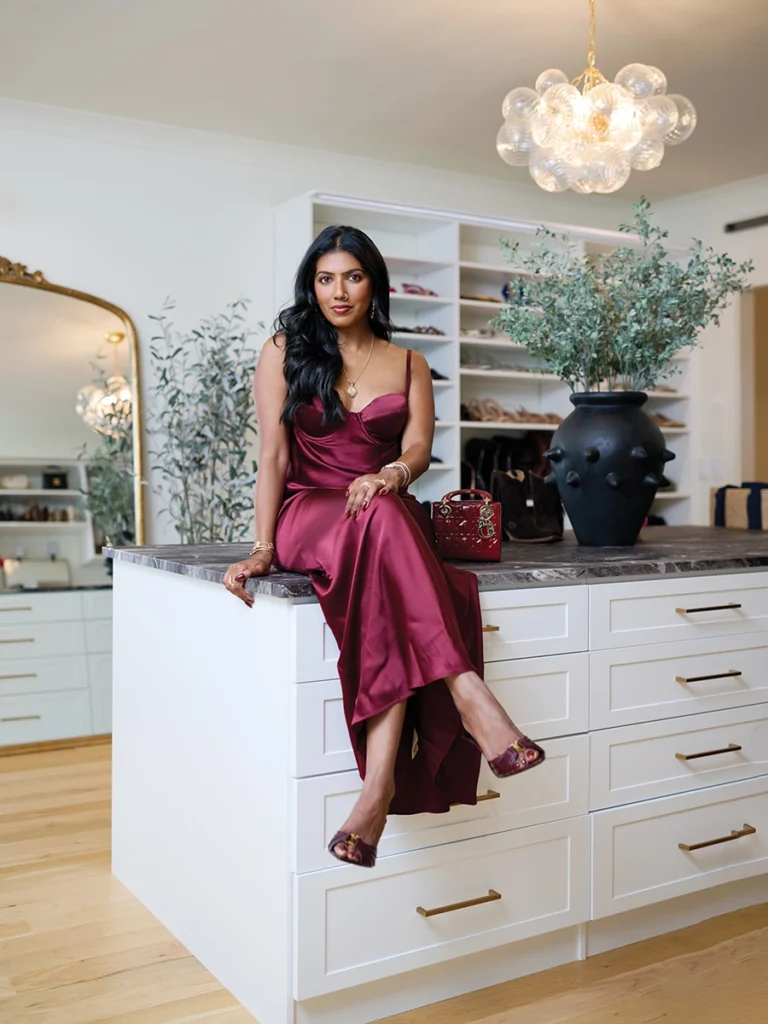
It’s unlikely that a girl born in Chennai, India, would become one of the most influential social-media creators in the U.S. But that’s exactly what Vidya Gopalan, known on social media as @queencitytrends, has done. With more than 4 million TikTok followers and half a million more on Instagram, she’s turned her passion for fashion and storytelling into a thriving business, partnering with global brands like Dove, L’Oreal, Rare Beauty, L’Occitane, Walmart and Amazon.
“I started my social-media accounts with no expectations — I just thought sharing my clothes and makeup would be fun,” says Vidya (pronounced VITH-yah), who recently celebrated her 40th birthday. “It’s only been about three years since my content really took off.”
Today, she creates, edits, photographs and produces content daily. Her posts range from shopping and beauty tips to everyday scenes with her family. Authenticity is the key, she says: “I’m not selling a product. I’m sharing my life. People [relate to] me because I’ve earned their trust over time by being honest about who I am and what I like.”
A journey rooted in family and culture
I first met Vidya several years ago after mutual friends suggested we connect. I was new to Charlotte and wanted to start an informal South Asian women’s networking group after the pandemic. At the time, there weren’t a lot of content creators in our culture’s community, so I wanted to learn how she got her start.
Vidya’s journey began when she moved to the U.S. at age 6. Her family emigrated from Tamil Nadu, a state in southern India. They first settled in Minnesota, where her father finished his Ph.D. in economics, then relocated to Arizona. Each summer, they’d return to India to visit relatives in Arimalam, a village in Tamil Nadu.
As a teen, Vidya was captivated by style. At 14, she got her first job at McDonald’s to fund shopping trips.
“No one else in my family was into fashion. My dad’s an economist, my sister’s a doctor, and my mom was stay-at-home,” she says. “When I came to [the United States], I would see how people dressed, and it fascinated me. This passion was always inside me.”
Vidya enrolled at the University of Arizona as a pharmacy major but switched to business and marketing at her father’s suggestion.
“This move ultimately gave me the tools to succeed in an industry that didn’t really exist yet,” she says.
After working in corporate retail at JCPenney’s Dallas headquarters, she moved to Charlotte and married her husband Rakesh, a lawyer, in 2010. Vidya left corporate life after having her two kids, Sahana (13) and Shaan (10), and started following fashion influencers online.
“As a mom, I also wanted something for me — a creative outlet,” she recalls. “People were always complimenting my clothes and asking where I got them, so I thought putting that content on social media would be helpful. I wanted to try.”
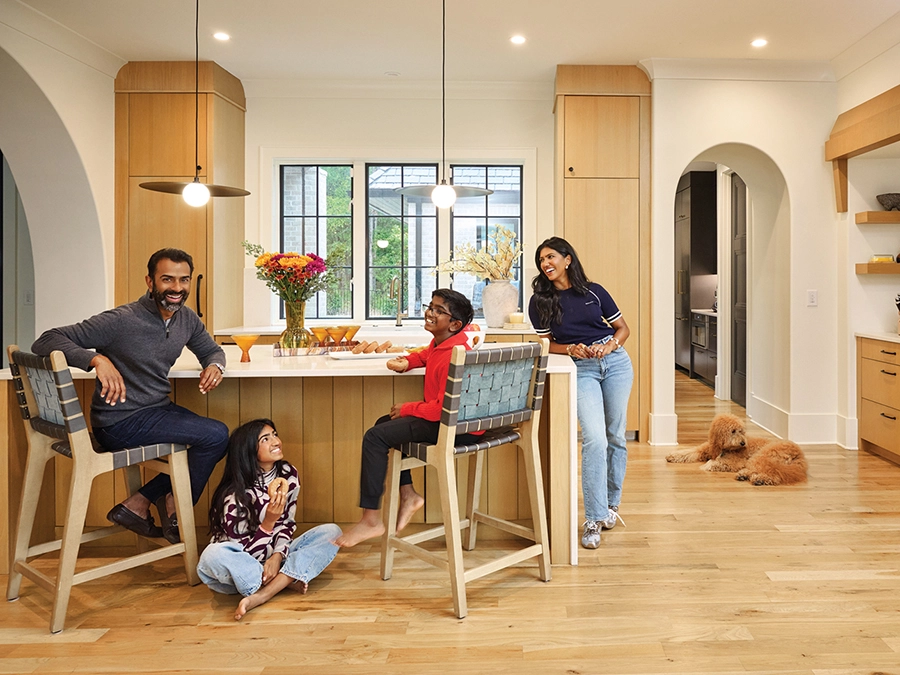
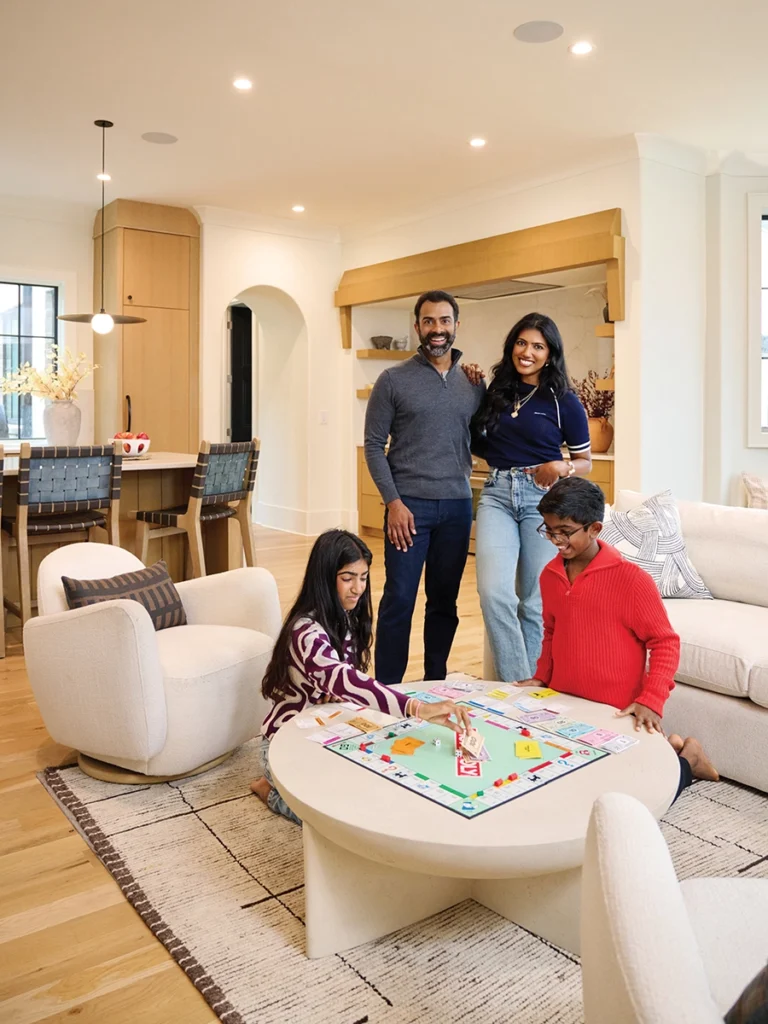
The Gopalans at home, from left: Rakesh, Sahana, Shaan and Vidya
Building a brand
In 2017, she launched her Instagram account — the name is a nod to Charlotte’s nickname and her love of fashion. Her first post featured a fanny pack she bought on Amazon for a trip to Cancun.
“I knew from other influencers that consistency was key, so I posted every day.” She staged her own photo shoots every Sunday, loading her family into the car with six outfits, shooting in different locations around Charlotte, and changing in the backseat. She did this for almost three years, without earning a penny.
Then came the pandemic, and with it, the explosion of TikTok. While many users posted dance videos, Vidya and Rakesh created funny parodies, which slowly gained traction.
Her big break came in 2021, when a video she filmed with her daughter in New York went viral. From there, she started posting more “mommy-and-me” content, outfit-of-the-day ideas and candid glimpses into her daily life.
“I never tried to be perfect. Some days I wear makeup, some days I don’t. I want viewers to see my real life — not just the glamorous parts.”
Vidya includes her family in her content now that her kids are older and can vocalize what and how much they want to share.
“If I asked them to stop doing their own thing to film, they wouldn’t do it,” she says. “My family content is natural and reflects what’s happening in our everyday life.”
Through example, she strives to show her kids healthy ways to consume and create content on social media. Vidya and Rakesh don’t allow weekday screen time outside homework and interacting with friends.
“As they get older, it gets harder,” she says. “It’s really important for Sahana to have that social connection and be allowed to call and text friends. This is the world they live in — there are no landlines.”
From viral videos to global brands
Vidya’s relatable, unfiltered content caught the attention of Digital Brand Architects, a California-based management firm that now handles her contracts and partnerships. Still, she maintains control of the creative side.
“This is a full-time job,” she says. “You have to be motivated to make content that looks effortless. I wake up every morning thinking about what I can do today to build my business.”
Brands typically pay flat fees for collaborations, usually requiring a few stories or reels. She partners only with brands that align with her content and values.
Sometimes, her success has led to opportunities she considers once-in-a-lifetime. In 2024, she was invited to the Democratic National Convention, where she interviewed Kamala Harris. On TikTok, the two discussed their shared Indian heritage. Other highlights include being featured on a Times Square billboard for a Rare Beauty cosmetics campaign with Selena Gomez, traveling to Bora Bora with Tarte Cosmetics, attending two Taylor Swift Eras Tour concerts (one in the front row) with her daughter and working with Dove on a nationally aired commercial. She even met Richard Branson on Necker Island.
“I’ve worked with brands I never saw myself represented in growing up,” she says. “Now, I help create for them. There are more South Asians in this space now, and we bring a fresh perspective. We also have purchasing power that brands recognize. I’m more likely to buy a foundation shade from someone who looks like me and is giving me their honest opinion rather than from an ad on TV that is unrelatable.”
Representation & responsibility
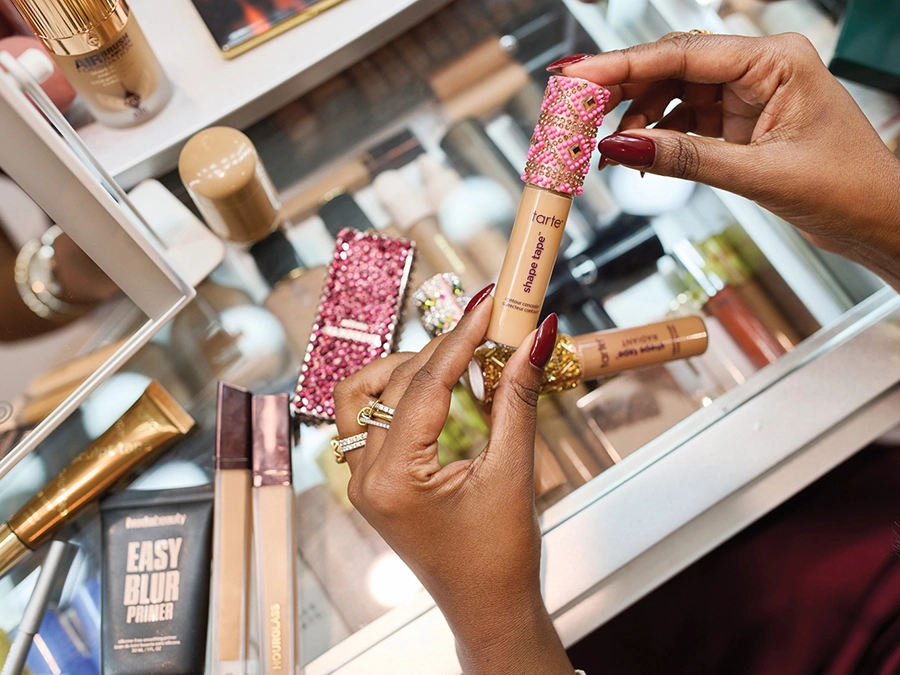
One of Vidya’s most meaningful projects this fall was a collaboration with New York’s Tarte Cosmetics to help design Diwali-themed concealer toppers (Diwali, also known as the festival of lights, is one of India’s most celebrated holidays). Proceeds from product sales support the South Asian Council for Social Services.
Her following is diverse, though about 90% are women aged 25–35, often early in their careers. That influences what she shares.
“When I show luxury items, I also post affordable alternatives. I don’t want anyone to feel like they must buy [expensive items] to be stylish — I’m just sharing what I like. Part of being fashionable is a feeling, and I want people to feel positive from their purchases.”
As her success has grown, so has her collection of handbags, clothes and home decor, gifted unsolicited to her by national and international brands. The packages arrive so frequently that she leaves a cart of refreshments and gift cards for delivery drivers. She only posts about products that resonate with her and her family.
“I find that sometimes South Asians or other minorities hide being luxurious, maybe because it took a while to get here. I didn’t grow up with money, so to share my success now is important — and, I hope, aspirational,” she says.
She also receives heartfelt messages from young followers who credit her with inspiring them to pursue their dreams or try something new.
“That’s what motivates me to keep going,” she says. But being open online has its downsides, too. “People think they can say anything about you. It’s hurtful when it’s not true. Until there’s more regulation, you have to develop a thick skin.”
Despite the challenges, she remains deeply grateful.
“I do have imposter syndrome sometimes,” she admits. “The influencer space is still so new. But with consistency, you can still break through and make a difference.”
Her parents and in-laws also recognize the magnitude of positive impact Vidya has.
“At first my parents didn’t understand this world, but they never told me not to do it,” she explains. “I think it made a difference that I was married and had financial stability from my husband when I first started. Now, they see the reach of what I’m doing as people stop them in airports or when they travel overseas and tell them ‘I follow your daughter.’”
Looking ahead
With platforms like TikTok facing potential bans and the influencer world constantly evolving, Vidya’s future as a content creator is uncertain — but she’s OK with that.
“I’m living one day at a time. I’m still learning, still growing,” she says. “I’m just grateful that I get to be myself, express myself and make a living doing this.”
Her advice? Vidya believes every business should have a social-media presence.
“It doesn’t matter what line of work you’re in, you can create a following,” she says. “There’s no science behind success here. Just be consistent and authentic.” SP