


by Cathy Martin
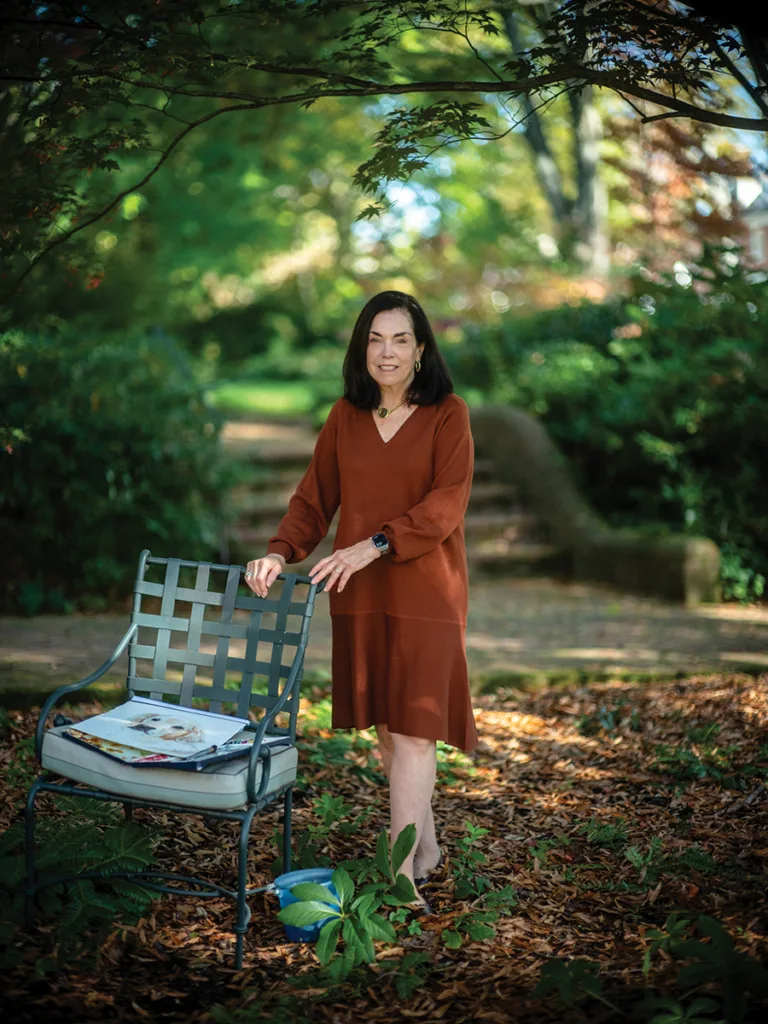
Watercolor artist Christine Walker is living proof it’s never too late to try something new. The former CPA didn’t pick up a paintbrush until she was in her 60s, when she took a three-hour watercolor painting class at Canyon Ranch in Tucson, Arizona.
After that, she was hooked. Walker began taking lessons and attending workshops, online and in-person, to learn more.
“Watercolor is the most transparent of the mediums,” she says. “Colors painted over other colors show through, and colors applied very wet next to another color blend into other beautiful colors. … A watercolor can last at least as long as an oil painting.”
Walker, 79, splits her time between her Charlotte home, where she has a small studio, and Blowing Rock. Since watercolors tend to dry faster than other media like oils, it’s easy to transport works in progress between her two homes.
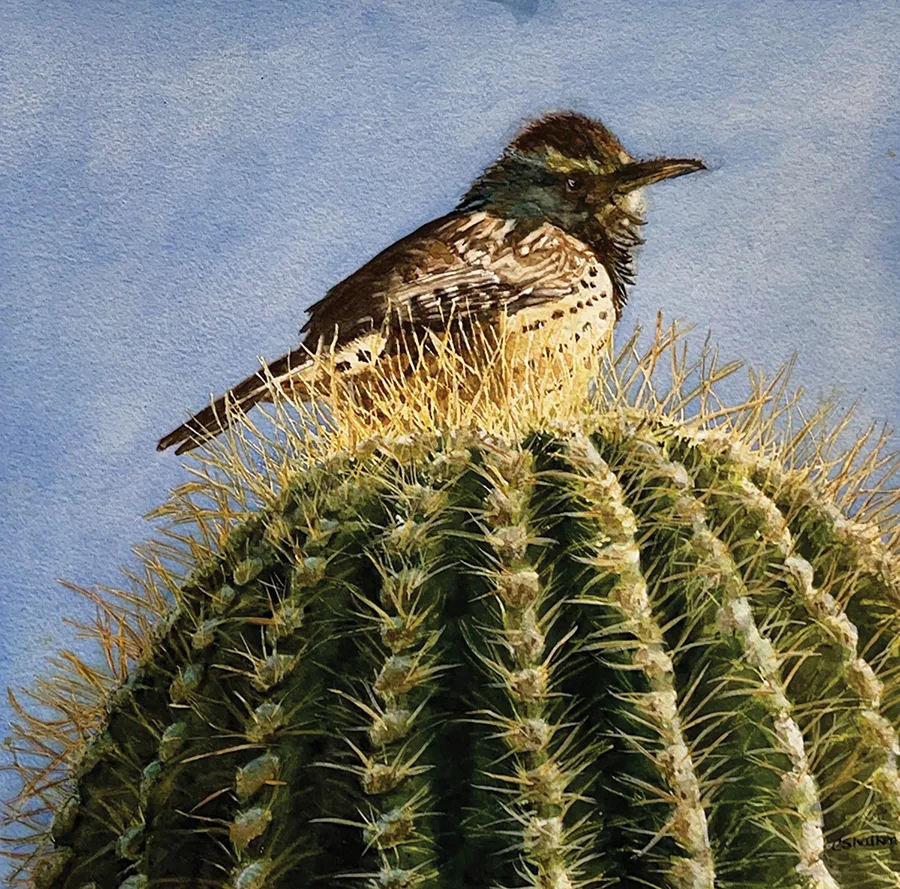
While she specializes in painting animals, Walker is equally adept at capturing people, still lifes and botanicals. She completes about 10 works a year.
“And maybe five or six of those, I really like,” she adds. Others are experimental, where Walker tries out new techniques.
A few years ago, she joined the Watercolor Society of North Carolina (WSNC), a nonprofit founded in 1972 for N.C. residents working in water-based media. Walker is now a signature member, a designation awarded to artists who have been accepted into three WSNC statewide juried exhibitions within 10 years.
In 2022, she began submitting her paintings to other regional arts organizations. Her works have been shown in national exhibits by watercolor societies in Alabama, Georgia, South Carolina, Pennsylvania and others.
“Getting into a show is considered quite an honor,” Walker says. “All societies require that a painting must be completed in the last two or three years, and if based on a photo, the photo must be taken by the artist.” One of her most recent submissions, a portrait of a panda at the Memphis Zoo called Reflecting You and Me, won the South Carolina Gold Merit Award in the South Carolina Watermedia Society’s 2025 National Exhibition.
***
Walker grew up in the small town of Waycross, Georgia.
“My mother said I was [artistic], but we had no art classes,” she says. Walker went to Emory University, where she met her husband, Chet. After college, she worked for one of the “Big Eight” accounting firms. But the job required frequent travel, and when her first child was born, she left her corporate role and began doing small-business accounting and taxes from home.
She’s always had what her husband calls a “two-sided brain.” While she didn’t discover painting until later in life, she had other creative outlets: knitting sweaters and blankets, needlepointing pillows, gardening, and sewing clothing for herself, her children and her grandchildren.
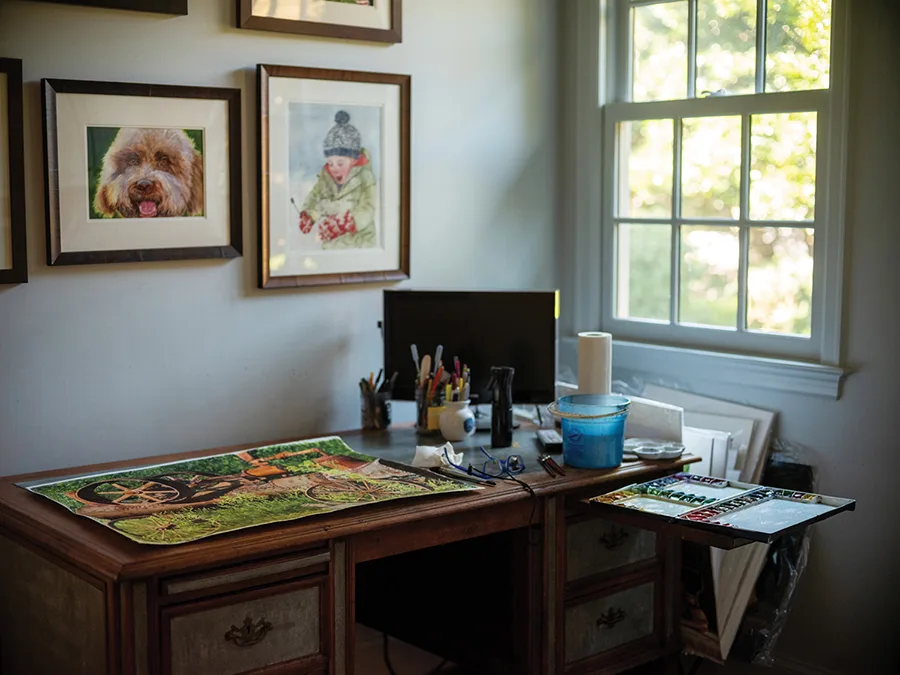
At her Eastover home, rooms and hallways are lined with Walker’s watercolor portraits of family pets, her grandchildren celebrating the Fourth of July, her husband and son fishing in Alaska, and others. In her studio, there are more paintings of people and places near and far — the zoo in Rome, an art exhibit in London, the Memphis Botanic Garden.
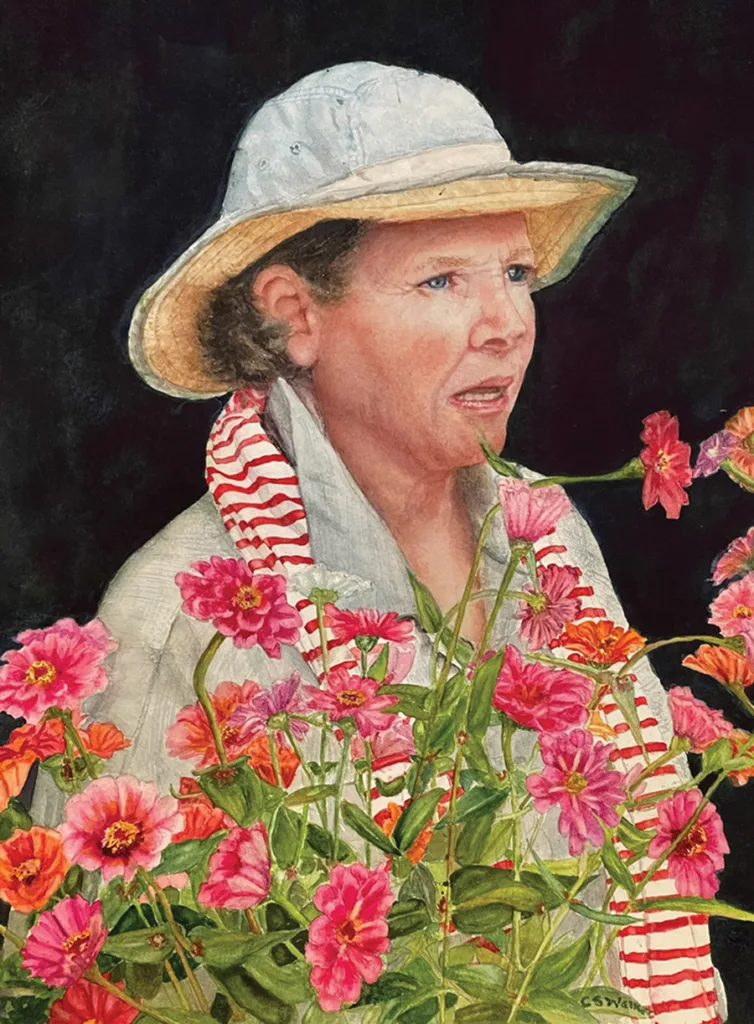
While animals are her favorite subject, Walker has an uncanny ability to capture facial expressions. Her painting Peddling Petals of a woman selling flowers at a farmers market in Boone has won several awards.
Her pet portraits are especially popular. “I could sell a dog portrait every day — people love to have their dogs painted,” she says. But Walker has little interest in commercial success.
“Part of it is recognition among my peers, because it makes me work harder,” she says when asked about the 10 or so prizes her paintings have won. “If I’m thinking I’m going to enter [a painting] somewhere, I want to improve, and I want to try new things.”
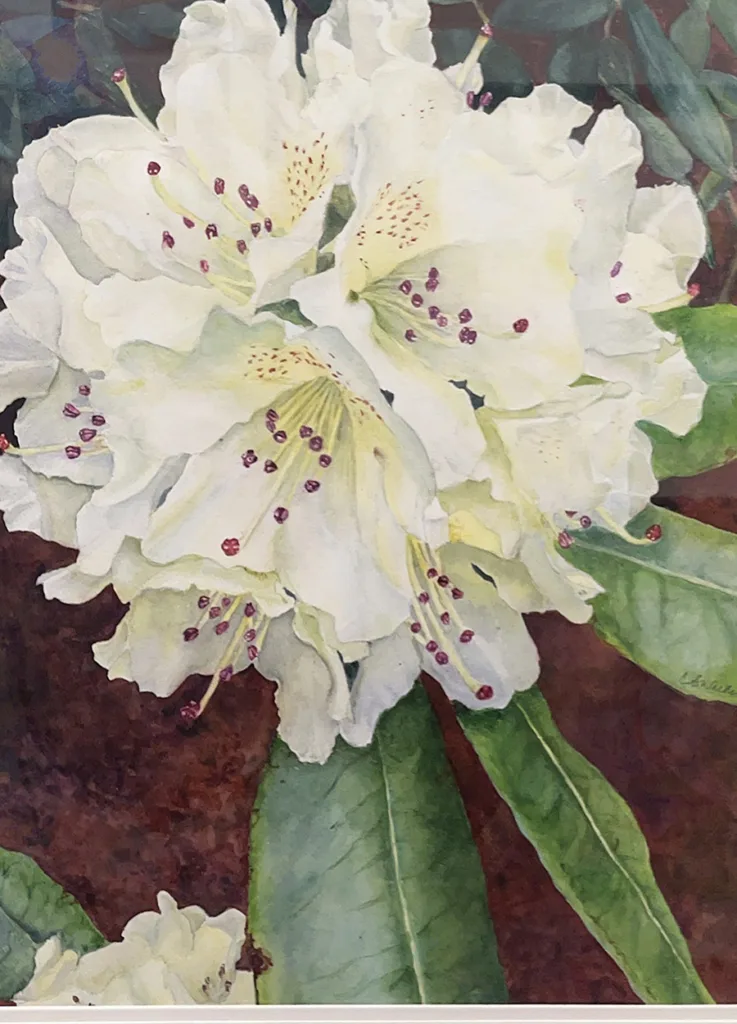
That continuous learning is a key factor that drives her work.
“I still take workshops, because I learn something from just seeing somebody else’s technique, and that might improve my next painting.”
Walker says anyone can start a new artistic endeavor, no matter their age or background.
“Just do it, is the main thing,” she says, citing numerous online classes, both live and recorded, available to artists of various levels. And then, with a smile, “And nobody’s going to necessarily see your work if you don’t want them to.” SP