



by Natalie Dick | photographs by Richard Israel
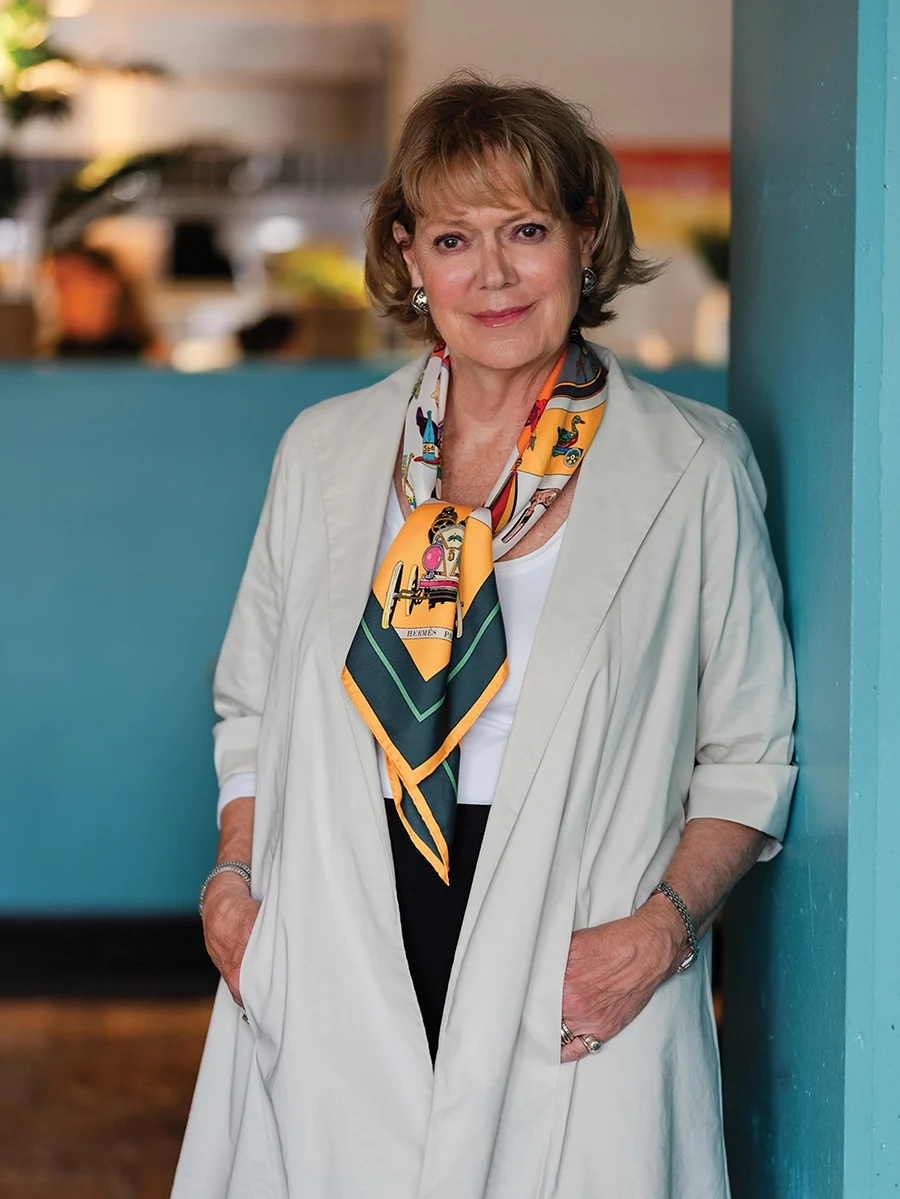
Julie Whitney Austin walks into Calle Sol SouthPark on a sweltering summer evening looking every bit the part of southern sophistication, her white jacket cuffed at the elbow, and a vintage Hermès scarf loosely tied around her neck. The scarf is a cherished piece that once belonged to her mother. Austin’s daughter, son-in-law and infant granddaughter trail close behind, tagging along for moral support.
“My greatest fear is public speaking and doing interviews,” Austin tells me. “I become a bundle of nerves.”
Her uneasiness subsides as she fondly recalls the history of Festival in the Park — the three-day celebration of art, music and community that her father founded 61 years ago this month.
“It’s one of Charlotte’s longest-running and most popular traditions,” she proudly tells me between bites of Tuna Nikkei Ceviche. “It’s unbelievable how much it’s grown since Daddy started it. He’d be so proud to see that it’s still alive and providing happiness to people from all walks of life.”
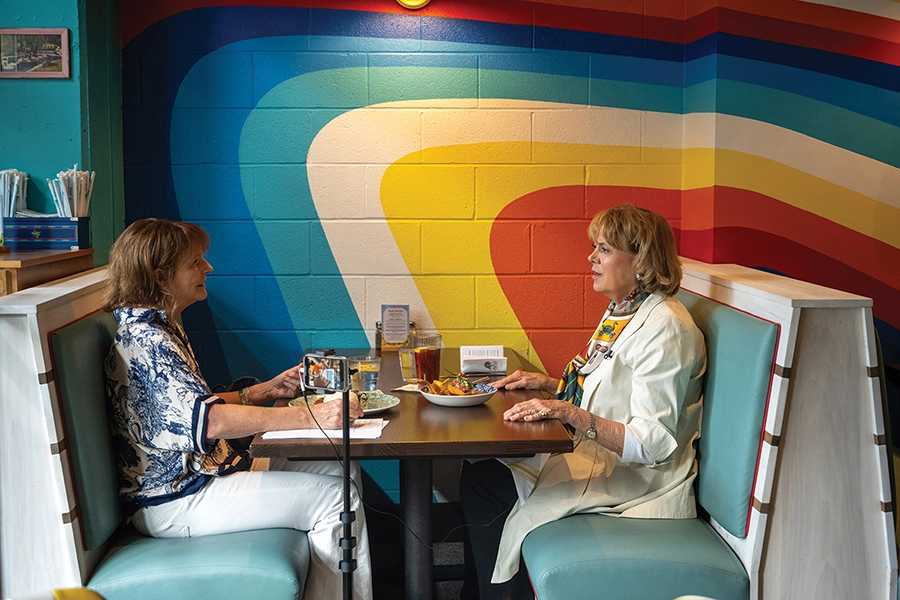
Author Natalie Dick with Julie Whitney Austin
A legacy rooted in family
Keeping the tradition alive has become an unexpected calling for Austin, and a role she deeply cherishes. The native Charlottean grew up not far from Freedom Park along tree-lined Colville Road. Both of her parents were actively involved in the community. Her father, A. Grant Whitney, was considered the city’s “go-to guy” for major civic and cultural events from the mid-’50s to the late 1980s.
“They called him ‘Mr. Charlotte,’” Austin shares with a smile, then pauses, lost in thought for a few seconds.
“Daddy was one of the first transplanted Northerners to move to Charlotte. Long before people relocated for the banks, he came to work as an insurance executive with Belk (department stores),” she continues.
In 1964, when Whitney’s boss — then-Charlotte Chamber chair and future mayor, John Belk — challenged him to create an outdoor, family-friendly, arts festival for the city, Whitney responded with his characteristic enthusiasm.
His vision for the festival was reminiscent of Tivoli Gardens in Copenhagen and his hometown of Boston.
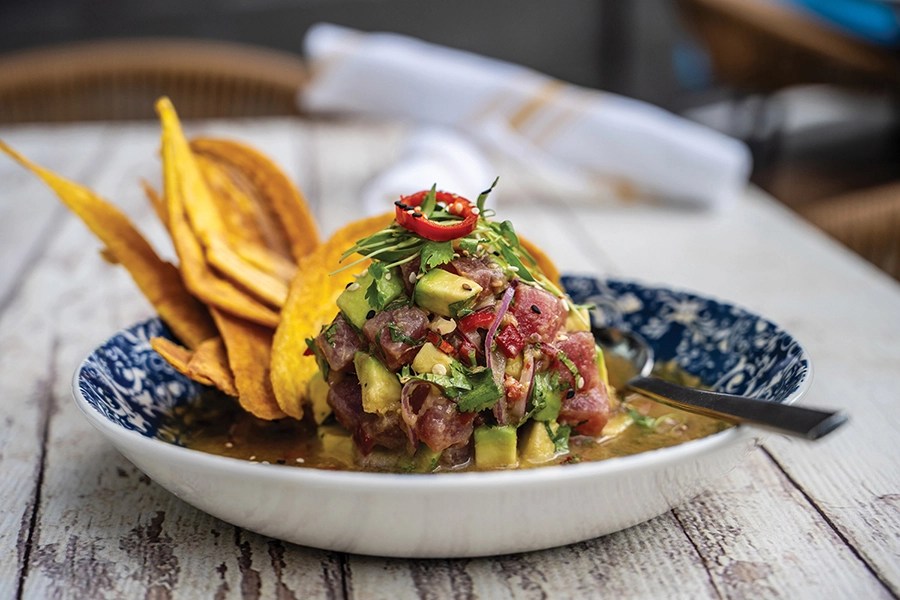
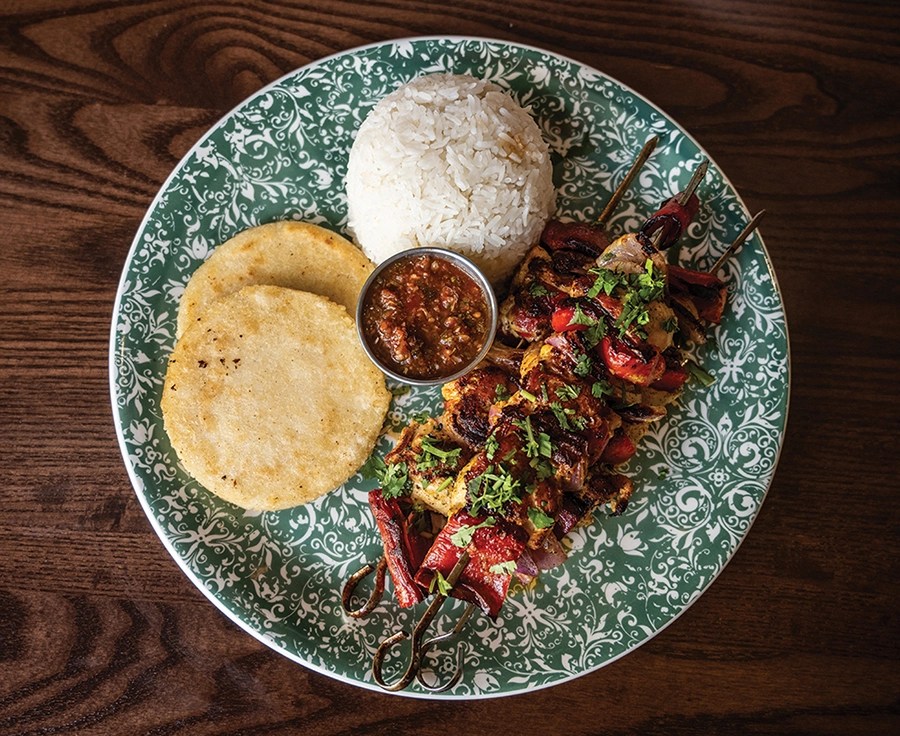
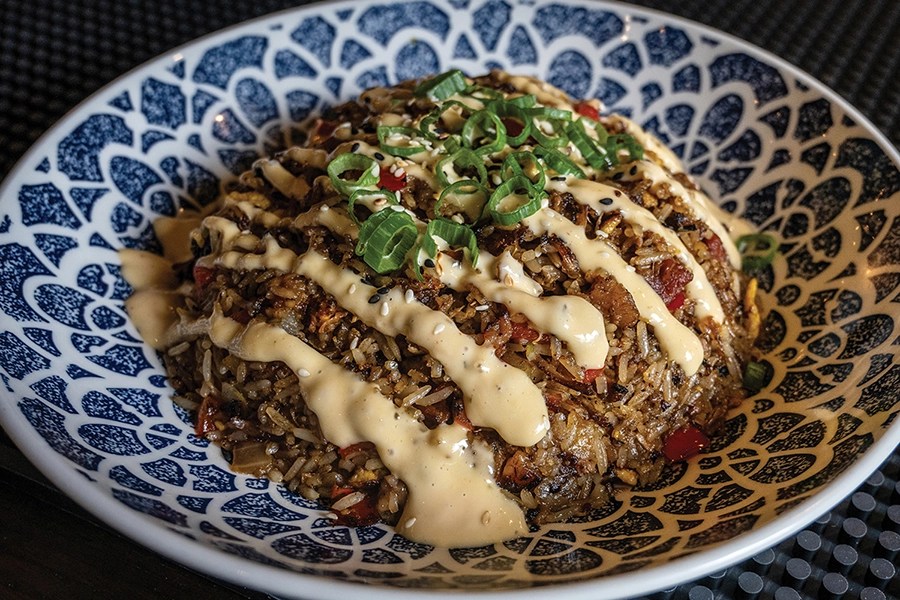
Right-left: Tuna Nikkei Ceviche (tuna with avocado, sesame, sweet soy-garlic chili sauce, cilantro, Fresno chilies, red onion and plantains), Chicken Pinchos (marinated Colombian chicken skewers with spicy aji salsa and mini arepas), and Cuban Fried Rice (roasted lechón, bacon, caramelized pineapple, plantains, onions, red peppers, scallions, garlic, egg, dark soy and jasmine rice).
“It featured 10 medieval-style tents and only a handful of performances,” Austin says. In the festival’s early years, artists weren’t allowed to sell their work. Freedom Park looked a lot different then, too. The stone wall that now surrounds the lake didn’t exist, and the band shell wasn’t built until the mid-1970s.
“Freedom Park has always held a special place in my and my family’s hearts,” Austin says. “Growing up, we would ride our bikes there every Sunday.”
Her family’s connection to the park grew even stronger once the annual festival came to fruition. Preparations that began months in advance, along with the final rush to opening day, are among Austin’s fondest childhood memories.
“I remember spending hours at the park helping set up the tents,” she nostalgically recalls. “We were there all the time. It was such a magical event and a special time to spend with my father.”
From selling Snoopy to carrying on the tradition
A lifelong lover of the arts, Austin spent the first 20 years of her career working alongside her mother, Lillian, as a sales representative for Hallmark stores and department-store chains, including Belk. Her most popular account was the Snoopy character from Peanuts.
“It was fun! Of course, we had our ups and downs about some things, but not much. It was wonderful, really,” she recalls.
When her father’s health began to decline from a rare neurological disorder in the late ’80s, the responsibilities of the festival fell to board members, Austin and her brother, Frank D. Whitney. By the time her father passed away in 1997, she was heavily involved in festival operations and fundraising. A year later, she officially became executive director — the festival’s first and only full-time employee.
“For his 26 years as executive director, Daddy never received a penny — his time was all volunteer,” Austin says. “I just wanted to see the festival continue, and I’m not sure it would have. It needed someone — one person — in the office to do all the work. I didn’t fully realize what I had gotten myself into at first,” she says.
An artist’s eye, a civic heart
Under Austin’s leadership, along with a hands-on board of directors and numerous volunteers, Festival in the Park has grown from a modest gathering to a marquee event, featuring nearly 200 artist tents and attracting an estimated 150,000 annual visitors. Still, the festival has maintained its original charm — it remains free, inclusive and rooted in community.
Austin insists on curating a broad range of art, from $10 jewelry pieces to $20,000 paintings.
“It’s nice to see such a diverse group of people at the park celebrating and enjoying art,” she says. “Everybody is welcome.”
Despite her shy nature, Austin is a meticulous organizer and a creative visionary, always thinking of new ways to honor tradition while keeping the festival fresh. When she took the helm, she introduced uniform white tents to create visual harmony, a small but impactful touch that reflects her artistic sensibility.
Fundraising remains the festival’s biggest challenge.
“Every year is a struggle,” she admits. “Daddy could make a phone call and get money. You can’t do that anymore.”
The festival, a 501(c)(3) nonprofit, receives no government funding. Grants, donations and vendor fees cover all expenses.
“If we charged a dollar per person, we could easily make $100,000 or more, which would be a huge help,” Austin says. As tempting as that may be, she refuses to charge admission, honoring her father’s belief that the festival should always be free to the public.
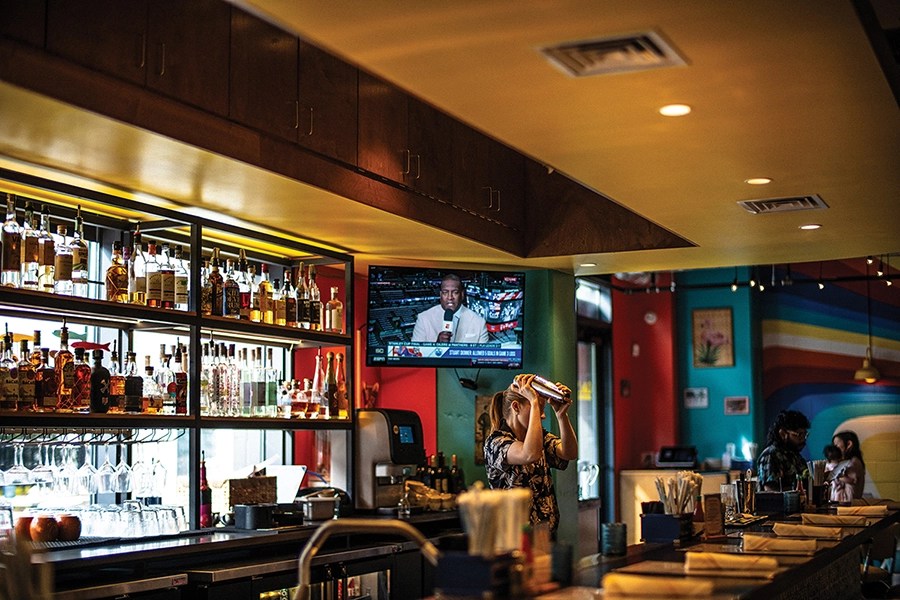
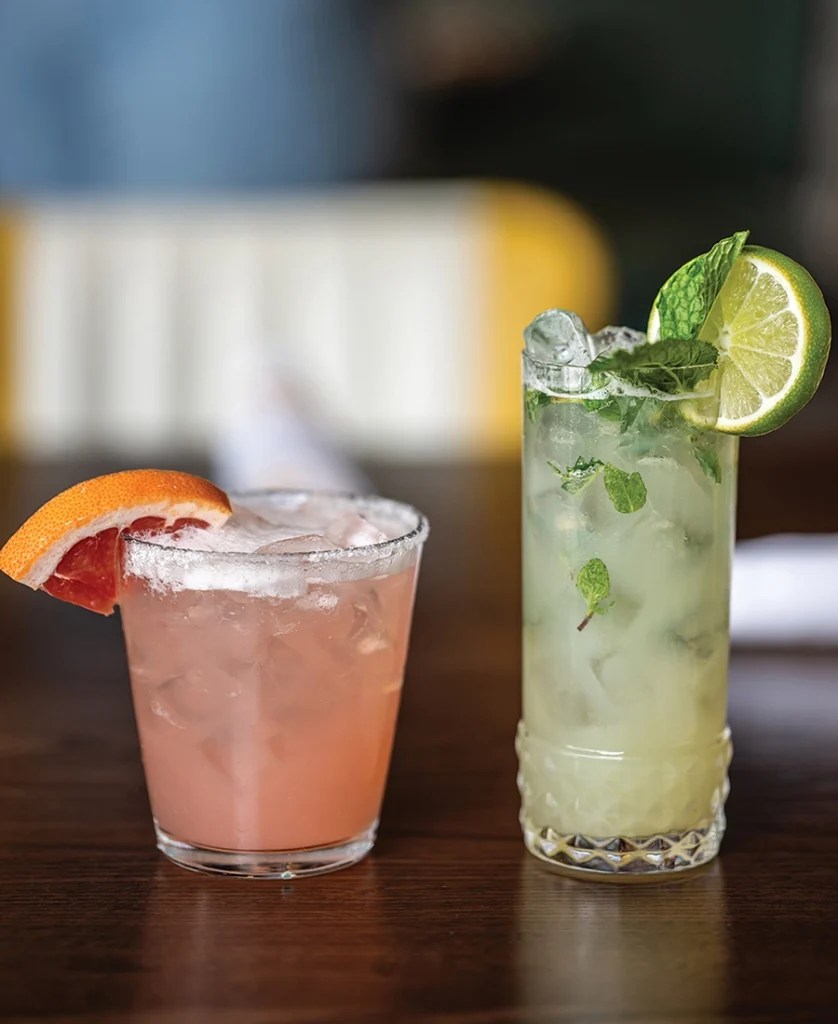
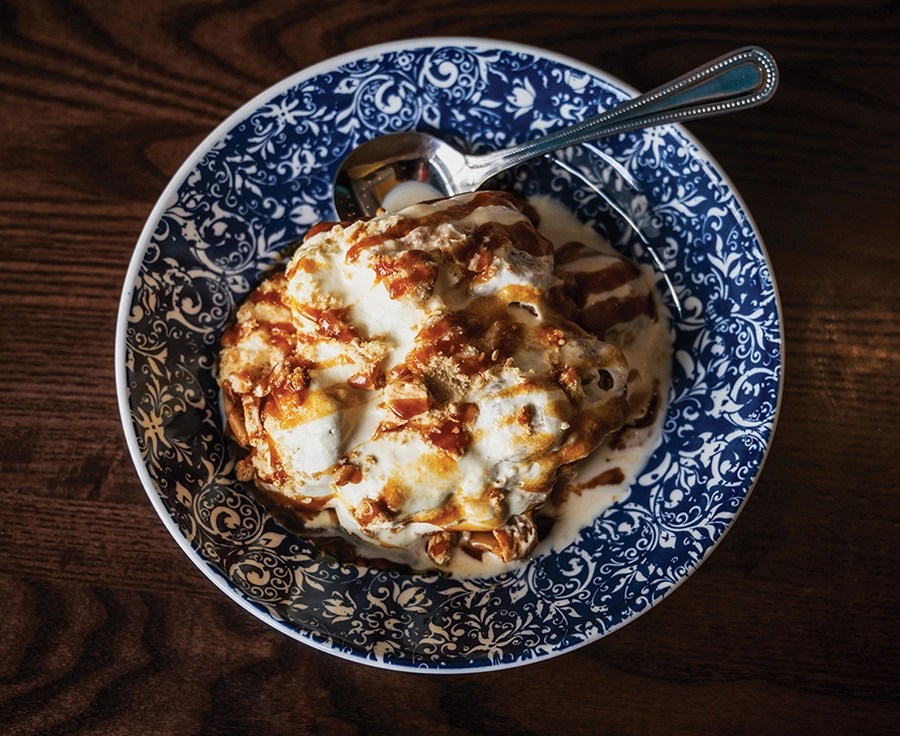
The bar at Calle Sol SouthPark with cocktails: Banana Pudding Tres Leches
Passing the torch
Family remains at the center of Austin’s personal life and career. Her daughter, Lily — adopted from China in 1997 and named after her grandmother — grew up accompanying her everywhere, often nestled in a pack-and-play at the festival office. Now 29 and a new mom herself, Lily helps run the festival’s social media and is an active committee member.
Austin knows succession planning is on the horizon. After all, “GiGi,” as she intends to be called, plans to spend plenty of time with her granddaughter in the years to come.
“I’m not tired, but I am going to get older and older every year,” she quips. “I’m not ready to hand it over just yet because I enjoy it so much. I do want to make sure my granddaughter can grow up enjoying the festival for many, many years.”
When Festival in the Park kicks off Sept. 19, Austin will gaze down at the crowd from her parents’ favorite spot. High atop the hill across from the park’s small island, it’s where a commemorative bust of her father now stands.
“I have a picture of Mom and Daddy that I love that shows them standing in that same spot, with everything set up and the festival at its finest,” she shares. “It’s wonderful to stand on the hill, look down at everyone, and think, we did this! That’s what Daddy would do.” SP
Did you know? Festival in the Park’s sister event, the Kings Drive Art Walk, is held each May along Little Sugar Creek Greenway. Hosted by Mecklenburg County Parks and Recreation, the free two-day event features acoustic musicians and regional artists.
Festival in the Park through the years
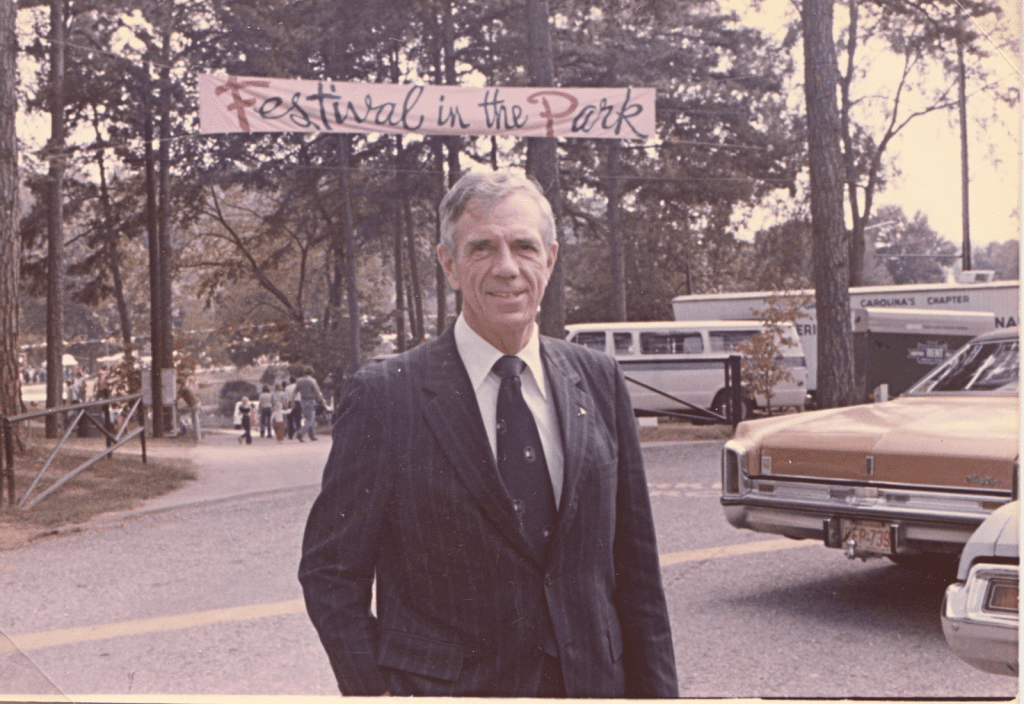
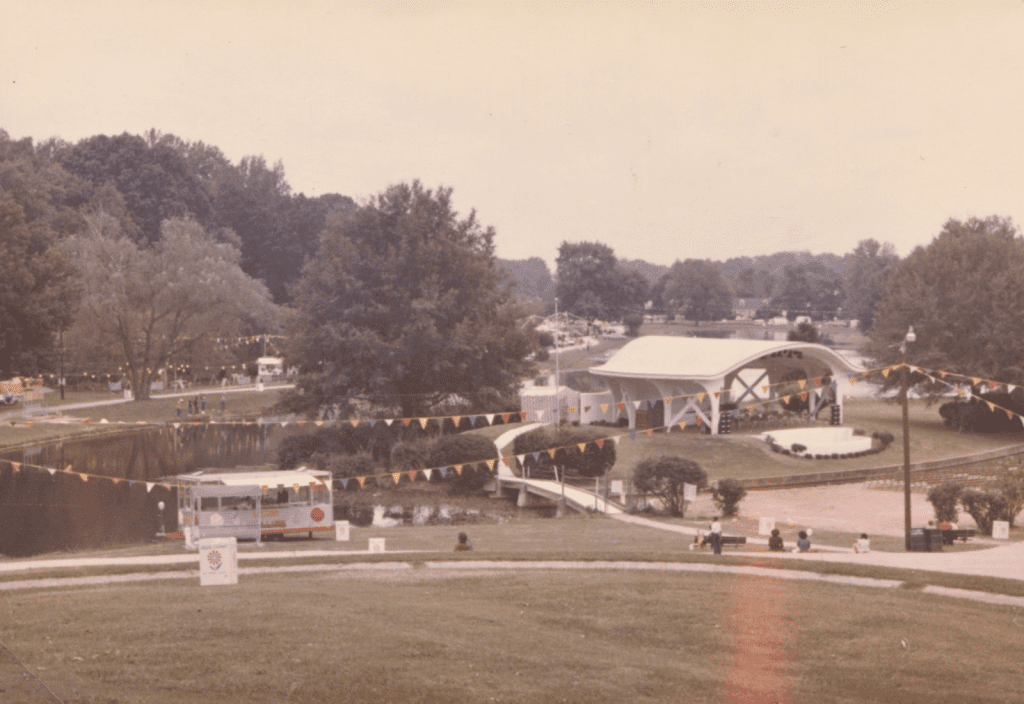
A. Grant Whitney at the entrance to Festival in the Park in 1976; overlooking Festival in the Park in 1980
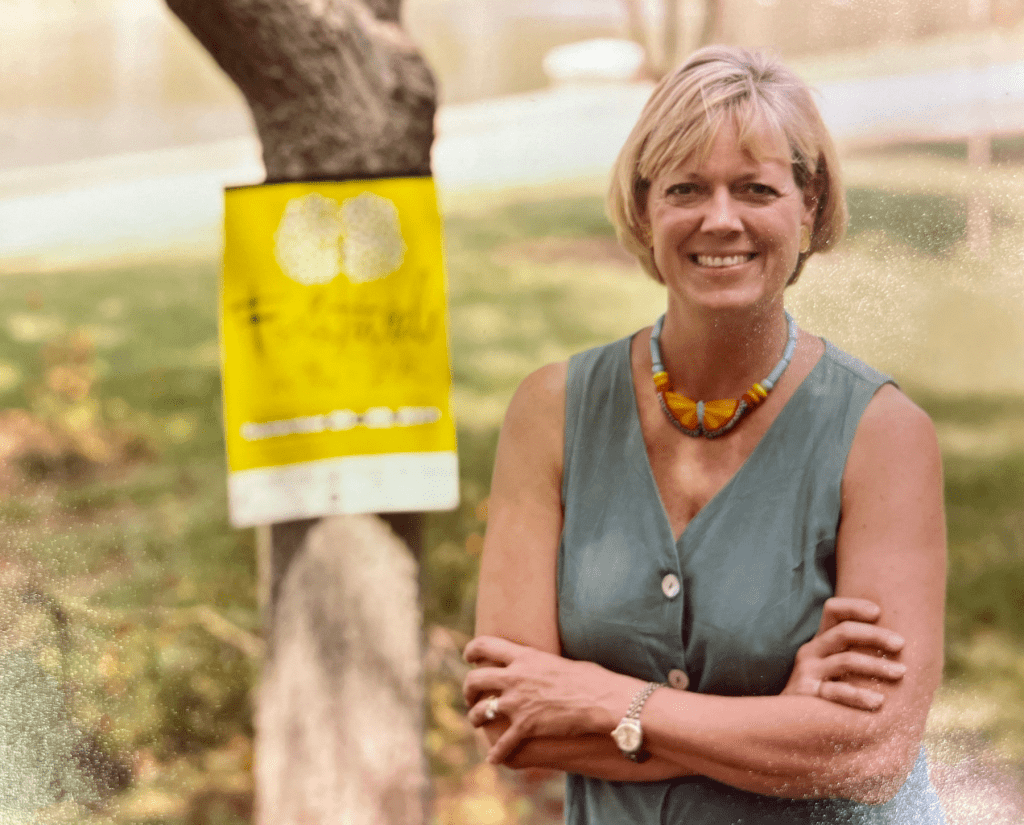
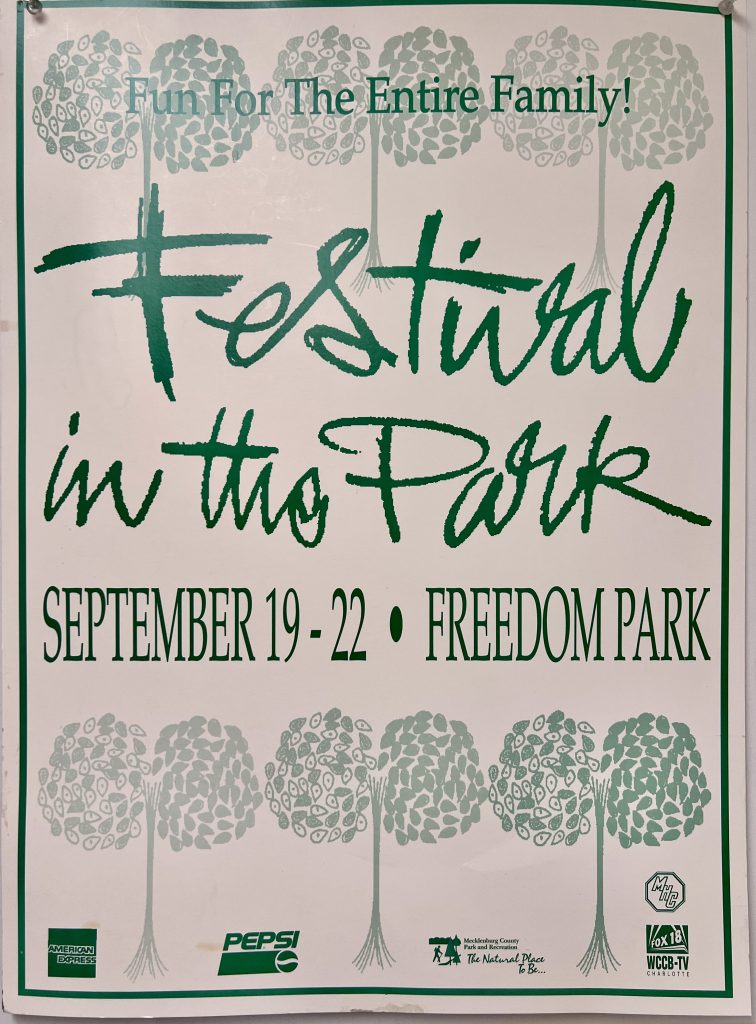
Julie Whitney Austin photographed at Festival in the Park in 2001; a vintage Festival in the Park poster