


by Liza Roberts
Raleigh painter Pete Sack says he never set out to become a professional artist, but he’s been a successful one for nearly 30 years, nonetheless. His work is featured in several corporate collections, including Duke University Hospital; his résumé features dozens of prominent solo and group exhibitions; and he’s currently got a waiting list for commissions.
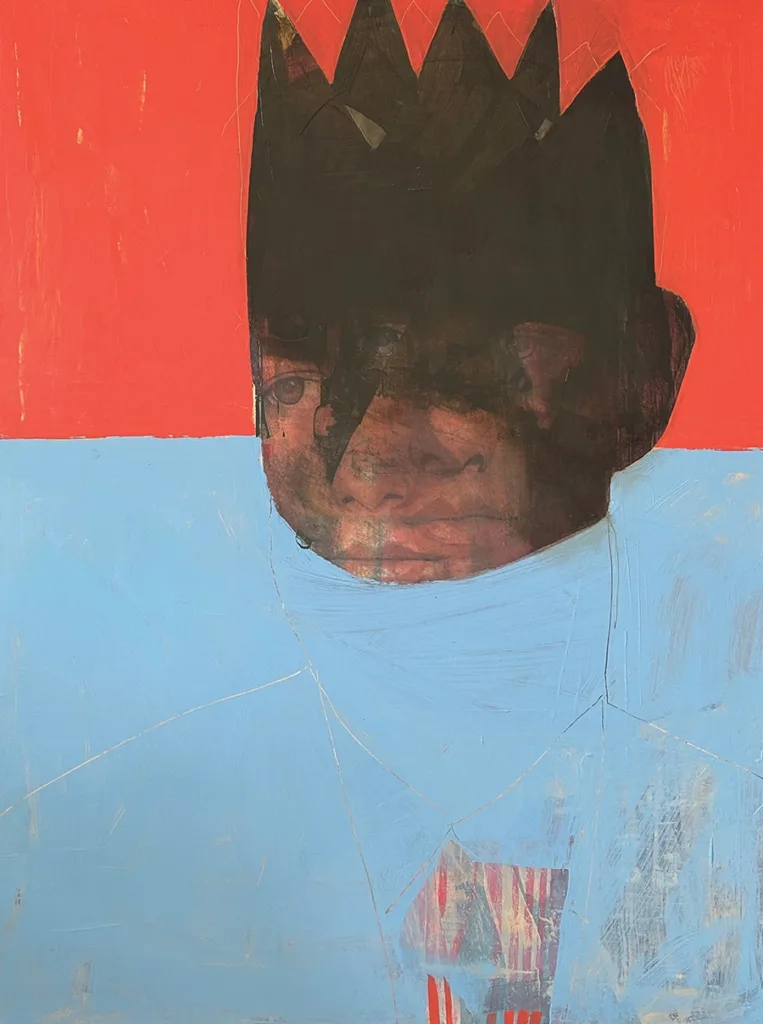
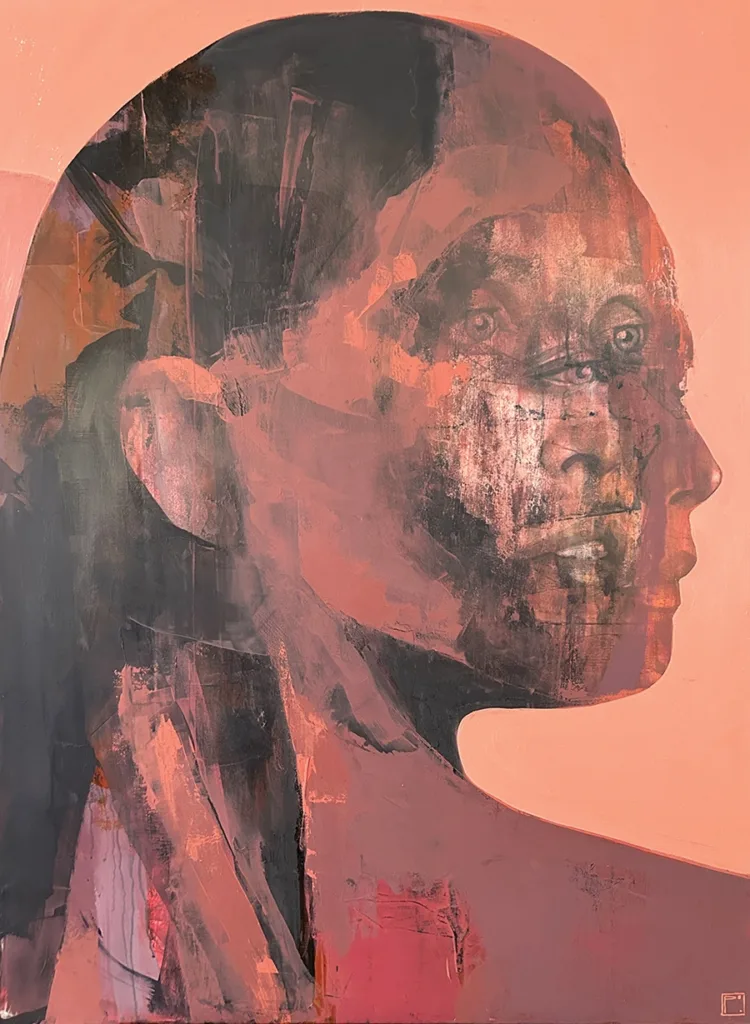
Known for paintings that feature finely nuanced portraiture through an abstracted lens, Sack often obstructs faces with shapes and colors, combining pencil drawings with watercolor and, finally, oil paint. Sometimes he layers two or three portraits of the same person on top of each other, with just enough expertly-wrought detail to recognize who it is.
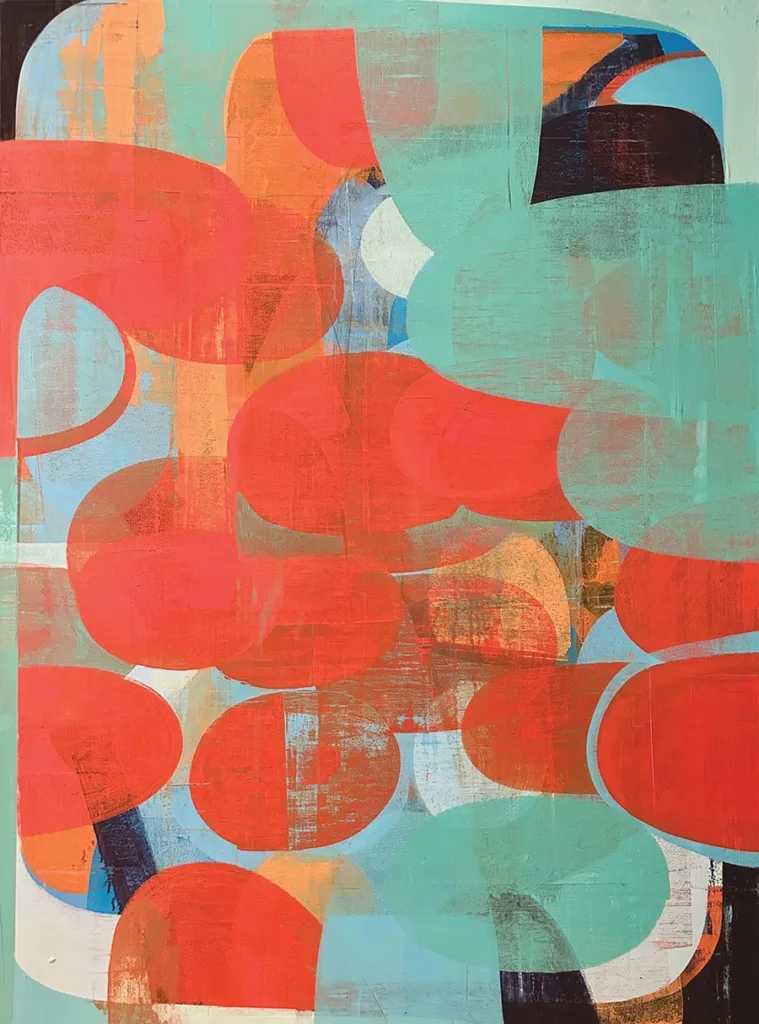
His completely abstract paintings are no less contemplative. One such series, Thought Patterns, “was created with the premise that we begin every day as a new person,” he says. Depicted as layers of spheres and ovals of various hues, some are cool and moody, others buoyant, a few bright and jangled. The resulting paintings reflect the moods and thoughts of the days he made them.
“Each day we are reacting to fresh thoughts, actions and environments,” he says. Working with a limited palette and the self-imposed requirement that he complete each piece within a single day, Sack says the works are fully representative of a particular moment in time.
Community spirit
Sack’s path began in 1988 at Raleigh’s Visual Art Exchange, a nonprofit hub for nurturing, connecting and showcasing artists, after he earned his BFA at East Carolina University. “It was where you got your pieces on the wall,” he says. He spent nearly five years as an artist in residence at SAS Institute in Cary, where he made as many as 150 works of art for the growing software company’s walls. These days, Sack’s got a downtown Raleigh studio and a dedicated roster of collectors.
None of it happened by sitting back and waiting for things to come to him. For years, Sack worked to create opportunities for himself, finding creative ways to get his art seen outside the gallery system. That included working with real-estate developers and interior designers, making art he could be proud of to suit them.
The spirit of those efforts expanded to the wider community in 2023 when he and three other established Raleigh artists, Jean Gray Mohs, Lamar Whidbee and Daniel Kelly, created The Grid Project, an art collective focused on mounting pop-up exhibitions for local artists. The collective has put on 10 shows in the last two years, exhibiting work by 25 artists. Those exhibits spawned the creation of what Sack and Mohs call the Boylan Arts District, an effort to connect the various arts and special-interest communities of that creative corner of Raleigh — music, poetry, cycling — and to get them cross-pollinating each other.
Coming full circle
The present moment is asking a lot of Sack, and a lot of his own deeply layered experience, calling on everything he’s learned over the last 27 years about what it means to be an artist in Raleigh.
Sack was tapped last spring to co-direct the VAE with Mohs. The two aim to revive the 45-year-old Raleigh institution, bringing it back to its roots as a resource for artists and a place for them to learn the practical business of being an artist, connect with other artists and show their work.
In October, under the VAE banner, the duo opened Echoes of Modernism, an exhibition examining how modernist architecture shapes our political, social and economic lives. Curated by artist Sam van Strein, it included work by international artists Amba Sayal-Bennett, Daniel Rich, Frances Lightbound and van Strein.
Meanwhile, Sack’s art has made its own demands. Last year, he had back-to-back shows for a monthslong stretch, and worried about “saturating” the market.
The demands of his work with VAE has given him time to “take a step back, to recalibrate” his art, and to think about where to take it next.
“My sketchbook is filling up, I am building up the reserves, and I’m excited to see where the work goes,” he says. “Toggling between the figurative and the abstract is still something that I’m pushing. At the end of the day, I’m always going to be an artist. I’m building up to something bigger.” SP
Liza Roberts is the author of Art of the State: Celebrating the Art of North Carolina, published by UNC Press.