


Elizabeth Lawrence found magic in each new leaf and flower in her Myers Park garden.
by Jay Sifford | photographs by Dustin and Susie Peck
In the middle of the 20th century, a lazy side street in Myers Park became an unassuming epicenter of Southeastern horticultural history. There, on Ridgewood Avenue, two legendary plantswomen named Elizabeth Lawrence and Elizabeth Clarkson forged a friendship, and two very different gardens.
Clarkson’s private garden became known as Wing Haven Garden & Bird Sanctuary, opening to the public in 1970. Born in 1904, Lawrence is legendary in another way: In 1932, she became the first female graduate from N.C. State University’s landscape architecture program. Her garden stands as a testament to both her prowess as a landscape architect and her willingness to experiment with plants from around the world to determine which flourished in the heat, humidity and clay of the upper South.
The one-third-acre garden became her teacher. Her hands-on research led to multiple books and magazine articles and over 700 gardening columns for the Charlotte Observer. She received awards and special recognition from The Charlotte Garden Club, American Horticultural Society, North American Rock Garden Society and many other groups.


Historic photo right courtesy of the Charlotte Observer Collection at the Robinson-Spangler Carolina Room
Lawrence was one of this country’s best writers of garden literature, says Andrea Sprott, former longtime curator of the garden.
“She wrote about Southern gardens, but her appeal was universal. Someone once said that she had a pen in one hand, and the other hand in the soil.” According to Sprott, Lawrence was quiet, introverted and quick-witted.
“She was impish, sparkly, diminutive and very complex. She never lost her childlike sense of wonder, always being in awe of a newly opening flower or unfurling leaf.” The magic is the common thread in both her writings and in her garden.
She had a great interest in native plants and was a member of the North Carolina Native Plant Society. However, she didn’t discriminate. She loved plants from everywhere. Case in point: She brought a beloved clump of bamboo from her previous home in Raleigh and planted it outside a side window. She loved its shadows and movement, and enjoyed watching the cardinals that sought shelter in it. We now know that this bamboo is invasive. But, since it is a historically significant part of the garden, it remains, contained by a buried bamboo barrier.
The garden as laboratory
Lawrence had no planting plan and only one drawing of the overall layout when she began crafting the garden in 1948.
“Her vision in mapping her garden was really brilliant,” says Sprott. By aligning the hardscape with prominent windows, she created a bespoke dialogue between house and garden. The sprawling, informal planting plan softens the hardscape and offers a tranquil, relaxing vibe that warmly welcomes visitors.
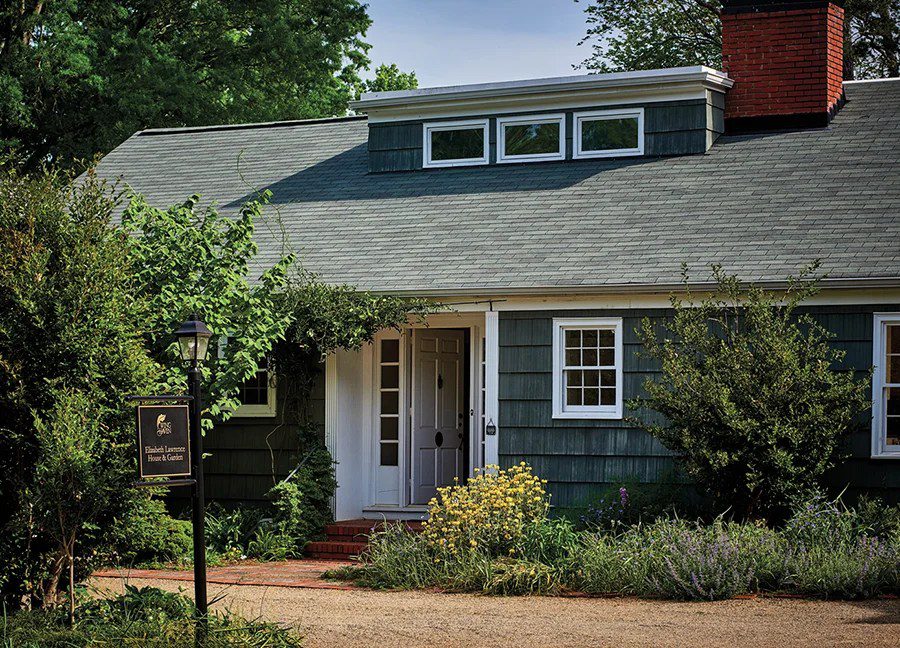
The house, unassuming by current Myers Park standards, is hidden from the street by a tall camellia hedge. A simple pea gravel parking pad creates necessary negative space when viewing the billowing front planting beds. Many of these plants are original to the garden.
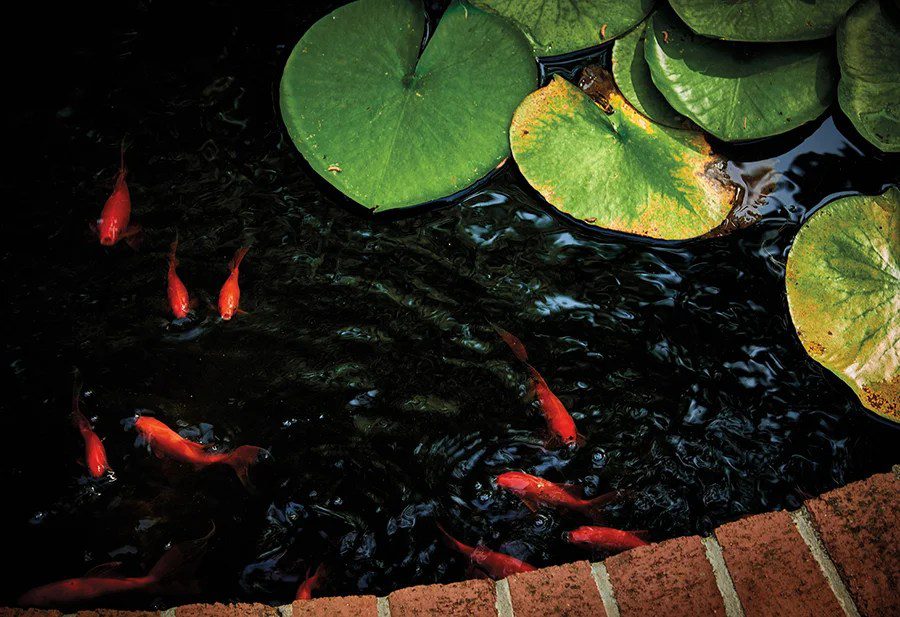
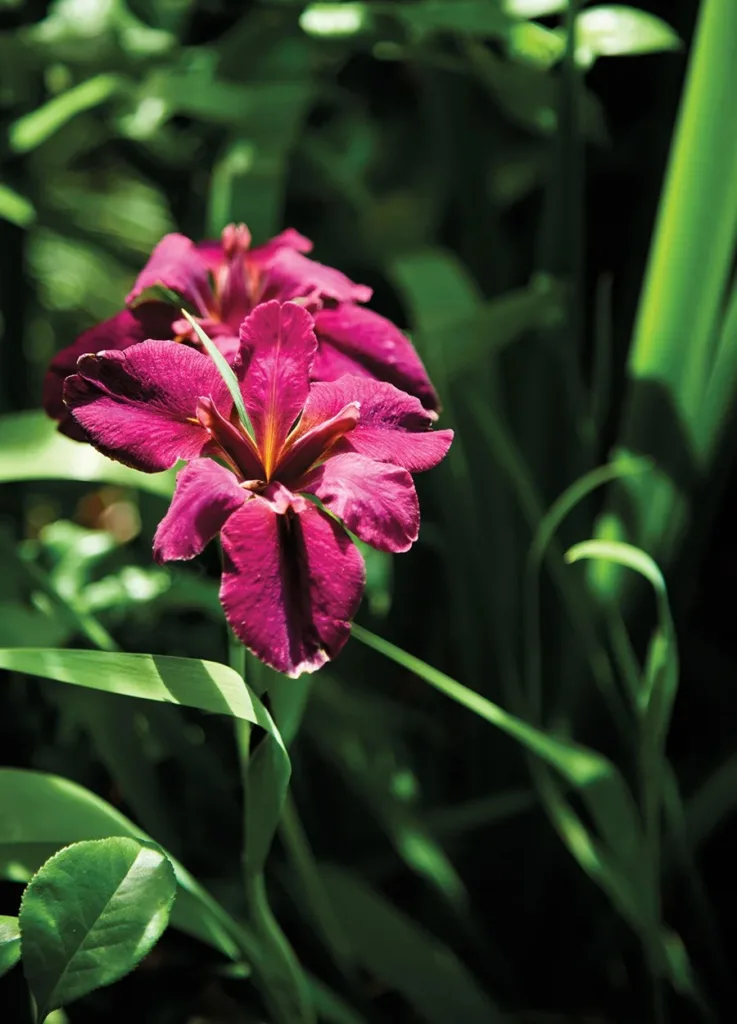
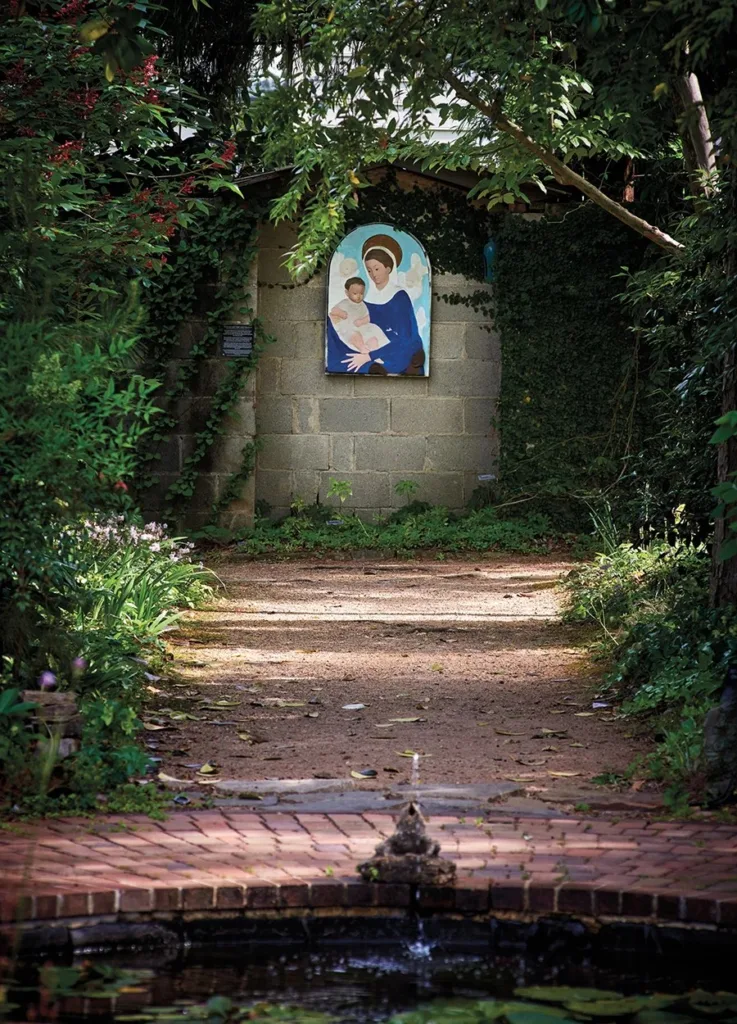
The back garden is laid out in sections. The upper garden, which welcomes visitors as they round the corner of the house past Lawrence’s beloved bamboo, is on axis with the main part of the house. Lushly planted beds pull the visitor to a circular goldfish pond, then to a woodland garden that terminates at a plaster installation of the Madonna and Child, Lawrence’s favorite part of the garden.
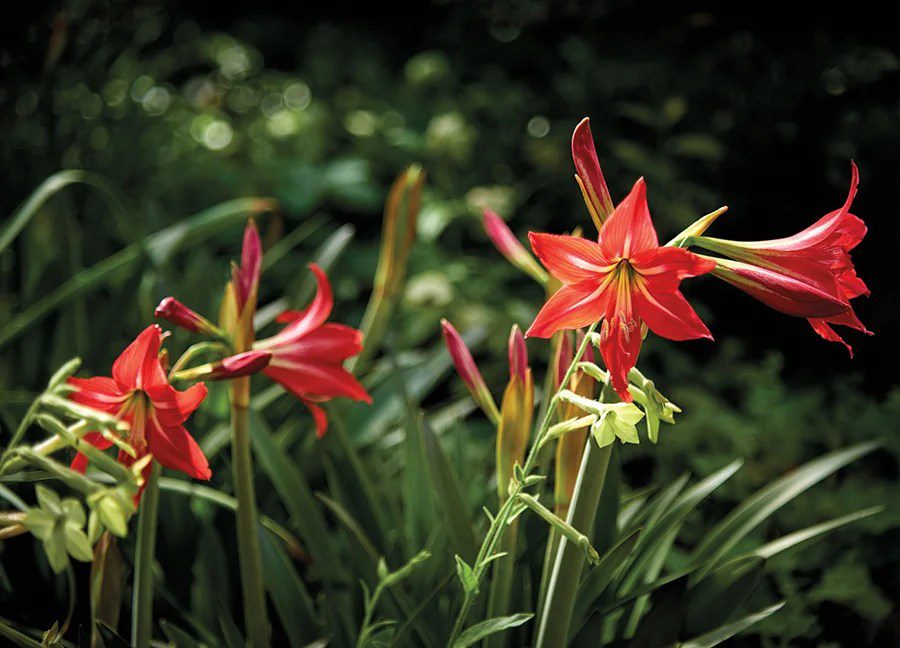
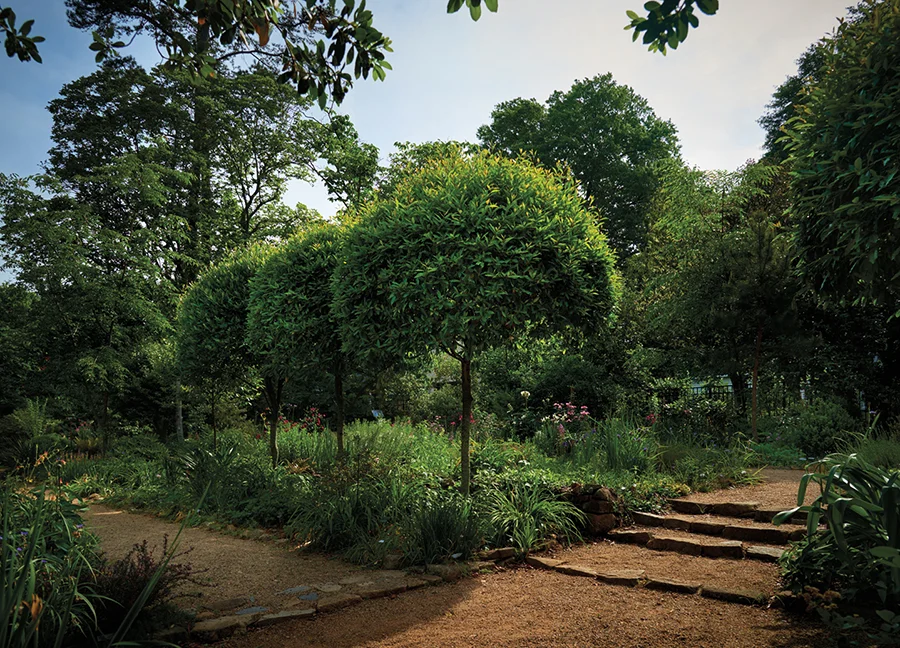
A short run of stone steps leads down to the lower garden. Here, Lawrence created a separate space that is delineated by five cherry laurel trees to add structural balance. These trees elicit curiosity of what lies beyond and create a bit of mystery. Perennials proliferate and seed into the walls here, a practice that is celebrated by the current staff.
Sprott scoured thousands of pages of Lawrence’s writings in order to emulate her passion for cultivating heirloom plants, both native and exotic, while trialing new ones and pushing their limits.
“For Elizabeth, the garden was a laboratory. Plants were on a conveyor belt in her world,” she says. Sprott continued that tradition in her 13 years curating the garden. Each year, she focused on a different collection of plants, ranging from hostas to irises. What would be appropriate? Her goal was to fill out the collection in spirit, not necessarily to the letter, in order to interpret and curate the space.
“Gardens always change and evolve,” she says. This directive continues under the direction of Michael Sheek, the present curator of both the Elizabeth Lawrence House & Garden and Wing Haven Garden & Bird Sanctuary.


Lawrence’s studio, left, overlooks the back garden
Continuing the legacy
Lawrence’s health began to deteriorate in 1983, facilitating a move to Annapolis, Maryland, to be closer to her niece. She died in 1985. The next year, Mary Lindeman “Lindie” Wilson purchased the home and continued the garden’s legacy.
“Wilson’s approach to honoring the history of the garden was remarkable,” says Sprott. “The garden wouldn’t exist without her. She would ask herself ‘What would Elizabeth do?’” Sprott goes on to say that “for Elizabeth, the garden was a laboratory, but for Lindie, it was a classroom.”
According to Sheek, approximately 20% of the plants are original to Lawrence, and 20% were planted by Wilson. The remainder were planted in the spirit of Lawrence.

In 2008, Wilson sold the property to the Wing Haven Foundation. By that time, it had been designated a local historic landmark by the Charlotte-Mecklenburg Historic Landmarks Commission and is entered in the National Park Service’s National Register of Historic Places.
According to both Sheek and Sprott, the garden is not only historic but offers a rich educational experience for both new and experienced gardeners. Horticultural and design lessons abound in this small city garden.
The garden takes an organic approach to maintenance, with no pesticide or herbicide applications. Weeds are pulled by hand. Beds are mulched with leaves and soil conditioner. Compost is applied in late winter as a top dressing.
The garden is not irrigated. Occasional hand-watering is done in summer for newer additions. “We don’t baby plants.” says Sheek. “It’s a bit of survival of the fittest.”
Sprott muses about garden trends.
“What’s old is new again.” Rock gardening was trendy during Lawrence’s lifetime and is back again. She installed plants in communities, meaning plants that shared common soil, water and light conditions were planted together. She also stressed that a garden should embrace seasonality.
“There’s magic to be found in every season outside” says Sprott, channeling Lawrence. “Scale and proportion were everything to her,” Sprott continues. One subtle design technique that is worth noticing is that the axial view in the main part of the garden narrows slightly farther from the house. This visually exaggerates the size of the garden, making it feel larger than it is. This takeaway could easily be applied to today’s downsized gardens.
* * *
The larger lesson to be learned from a visit to the Elizabeth Lawrence House & Garden is that gardeners should be encouraged to try something new. The garden’s balance between old and new is profound. Lawrence advocated looking past the weeds and other garden maintenance, and experiencing the magic that a garden provides. This is a worthy reminder for all gardeners. Serendipity, awe, magic and inspiration are all waiting to be discovered in Elizabeth Lawrence’s garden. SP
The Elizabeth Lawrence House & Garden is located at 348 Ridgewood Ave. Visitors are welcome Wednesday through Saturday from 10 a.m. to 5 p.m.