

by Michael J. Solender
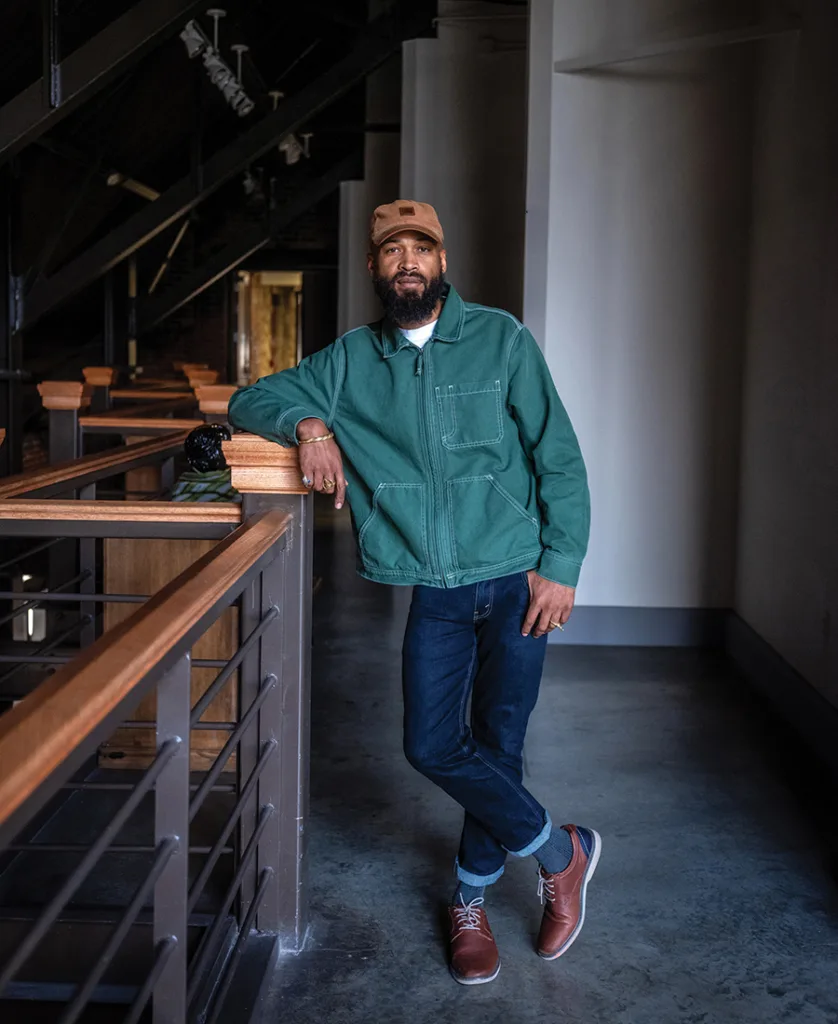
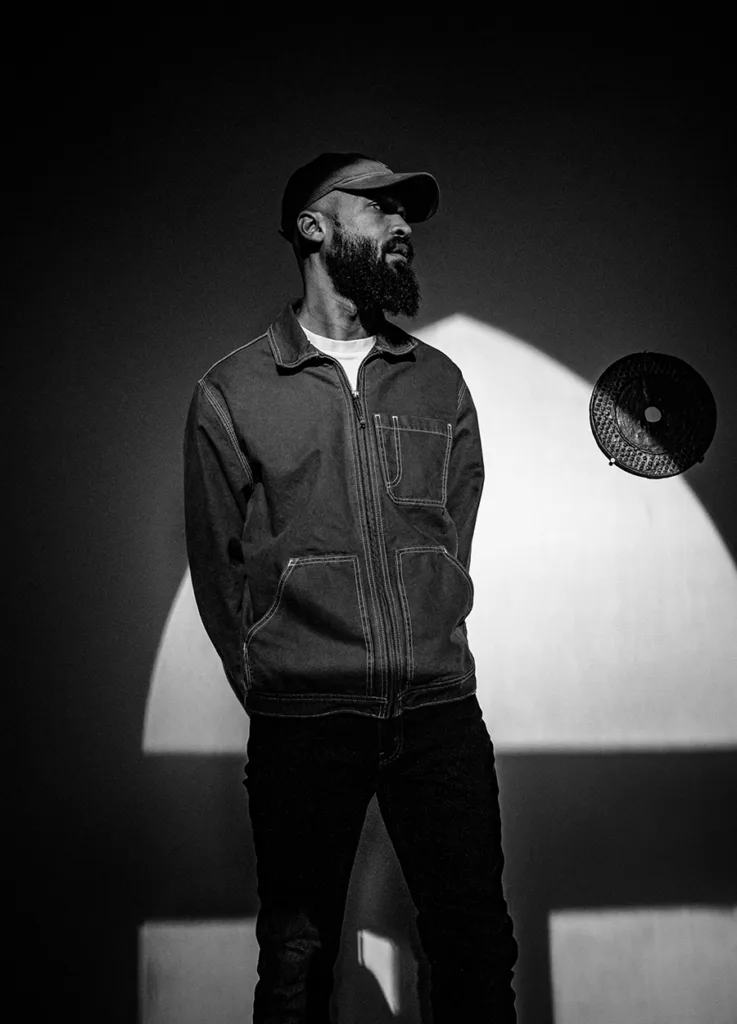
Asa Jackson enjoys a bird’s-eye view of the daily happenings at McColl Center — quite literally.
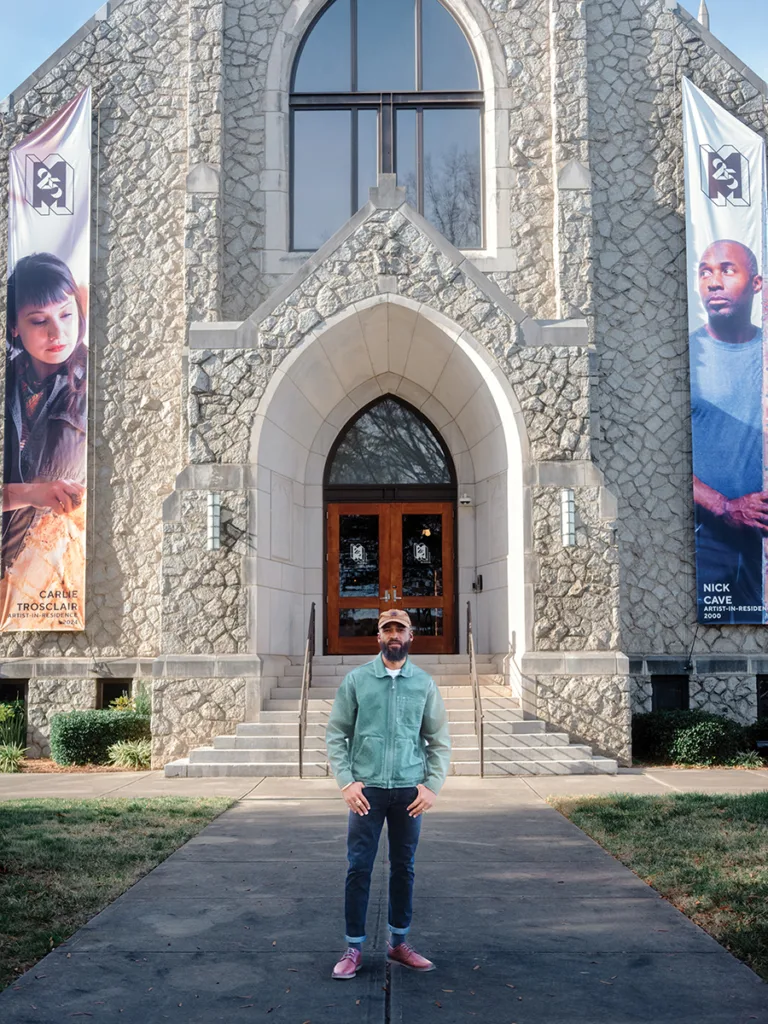
The center’s top administrator makes his office in a converted bell tower-turned-artist’s studio atop the Gothic Revival former First Associate Reformed Presbyterian Church on the north end of uptown. It’s only accessible by stairs, so Jackson, tall and lean, gets in his steps and enjoys the occasional solitude the retreat affords him.
Founded in 1997, the McColl Center was envisioned by former Bank of America CEO and arts advocate Hugh McColl Jr. as an artist residency and space for contemporary art. It opened to the public in 1999.
Since its start, the McColl Center has supported local, national and international artists. Its signature artists-in-residence program has hosted more than 400 creatives — 40% are from North Carolina — and is nationally recognized. Alumni artists include Mel Chin, Carlos Estevez, Anne Lemanski and Nick Cave.
“My mission, quite simply, is to vet great talent for Charlotte from around the world, and to elevate talent from within Charlotte to the world.”
Jackson became president and CEO in January 2025, bringing decades of experience in arts administration and the firsthand perspective of a creator. His résumé includes founding and operating the 670 Gallery in Hampton, Virginia; co-founding and serving as executive director of the Contemporary Arts Network Foundation, a nonprofit in Newport News, Virginia; and serving on the board of the Virginia Commission for the Arts from 2018–23 and as chairman in 2022.
His own artwork explores the intersection of textiles from various countries, cultures, time periods and personal histories. Jackson’s work is included in collections such as the Virginia Museum of Fine Arts, the Capital One Corporate Collection and the Hascoe Family Collection.
In 2024, Jackson took an administrative sabbatical and served as an artist-in-residence at McColl Center, refocusing on his practice and connecting with the Charlotte arts community. When the opportunity arose to lead the center, Jackson, 37, leapt at the chance to bring his nonprofit arts-management experience to the role.
Responses have been lightly edited for clarity and length.
How does your artist’s perspective influence your leadership approach?
My administrative life and my art-making life feed into each other. From an organizational standpoint, everything comes back to fostering pathways for artists. Being both an artist and an arts administrator, I follow intersecting — not parallel — paths. As an administrator, I lean heavily on the five elements of [late museum director and gallerist] Walter Hopps, and I’ve come to see these as a blueprint for individual artist success, too.
Number one, you must have globally competitive artwork being created locally — work you can take anywhere, and it holds up in quality. Two, you need public spaces to show that work, and those spaces should elevate the art, not overshadow it. Three, you need documentation — because that’s both history and PR. Fourth, you need institutional buy-in, since institutions give credibility to what’s happening. And fifth, you need patrons — the funding that keeps the system flowing.
Within three months of being here (initially as an artist-in-residence), I had already built a whole base of community. I visited galleries, artists’ studios, curators and museums — and learned about the environment here in Charlotte that I’ve been able to leverage in my role leading the center.
How does your approach benefit local artists and the broader Charlotte community?
I came into an organization that was financially and operationally stable, with a board directive to refocus on our roots and core mission: being a space for artist creation and development.
My mission, quite simply, is to vet great talent for Charlotte from around the world, and to elevate talent from within Charlotte to the world. I think it’s really about osmosis. When artists come here from around the world, they bring their culture, their perspectives, their way of life — and that energy seeps into the local community.
These visiting artists are here long enough to build real connections, with local artists, collectors and enthusiasts alike. It becomes an exchange. For the visiting artists, Charlotte can start to feel like a second home; for the community, it’s an infusion of global creativity and collaboration.
For local artists, we have our Beyond the Studio series, which offers professional-development workshops. If you’re an artist who wants to improve your portfolio, learn better documentation techniques, or sharpen your sales and marketing skills, the center is accessible to you through free or low-cost programs.
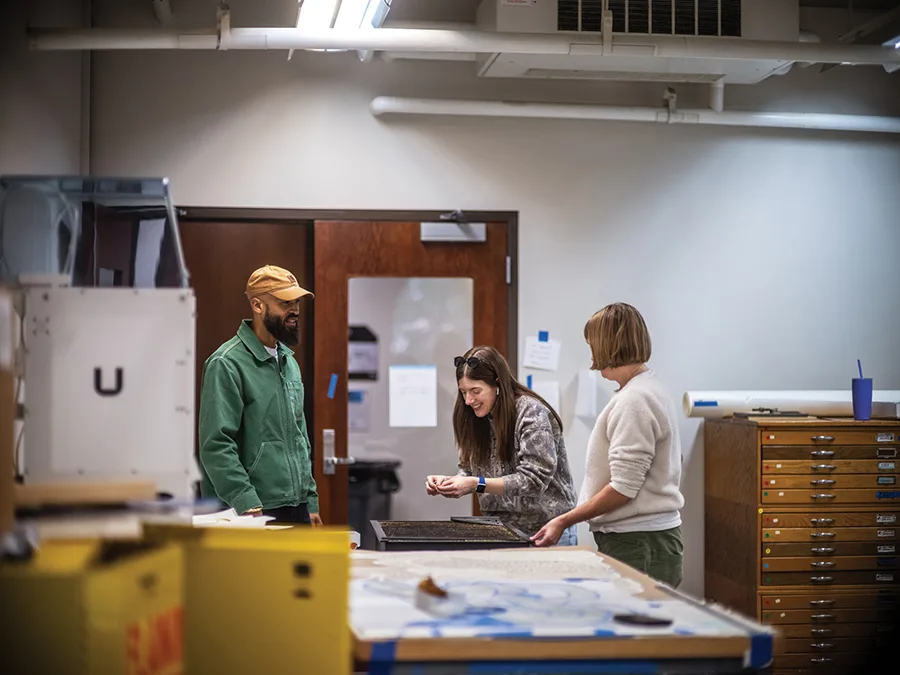
In addition to our core residencies, we offer studio space to local artists and access to a wide range of materials, labs and equipment — from kilns and printmaking tools to laser cutters and a full woodshop.
How can someone who’s curious about art — but not necessarily a collector — engage with the McColl Center and its artists?
People can simply drop in. We have exhibitions and regular events, and people can tour the center and engage directly with artists on Fridays and Saturdays from noon to 6 p.m.
For those looking for deeper engagement, we offer the Contemporaries program. It’s designed for new and emerging collectors — or anyone wanting to learn more about collecting. Participants follow a yearlong curriculum that includes time with artists, gallery and studio visits, and field trips to museums and creative spaces.
Our artists collaborate with educational and institutional partners, including UNC Charlotte and Winthrop University. We also run intern and co-op programs with local artists to encourage idea exchange, networking and relationship-building.
Tell us about some collaborations on the horizon.
We have a developing collaboration with the North Carolina Museum of Art in Raleigh. They’re establishing a new location in Winston-Salem, and we’re partnering with them for the next three years.
The McColl has also been chosen as one of nine host sites for an EU-sponsored residency, sending 27 artists from the European Union to America for two-month residencies. I was selected as a panelist to help choose the artists coming to the U.S.
We’re also partnering with the Gantt, the Mint and the Bechtler … to create a collective seminar — an effort to cultivate a broader collecting and patron culture in Charlotte.
What do you want people who may not be familiar with the McColl Center to know?
This is a place where art-making happens. It’s a place for artists — but also for anyone who loves the arts. If you want to be involved, this is your entry point. SP